

Introduction
If you use a water purifier at home, you probably trust it to provide clean and safe drinking water every day. However, many homeowners forget one important maintenance task — cleaning the RO storage tank. Over time, impurities, bacteria, and sediment can accumulate inside the tank, affecting the quality of your drinking water.
Knowing how to clean RO water tank at home is essential for maintaining the hygiene and efficiency of your water purifier. A dirty tank can lead to problems like unpleasant odor, bad taste, or even bacterial growth in the stored water.
The good news is that cleaning your RO tank at home is easier than most people think. With the right tools and a simple step-by-step process, you can keep your RO purifier working efficiently and ensure your family drinks safe water.
In this guide, we will walk you through practical RO water tank cleaning steps, safety tips, and maintenance practices that help extend the life of your purifier.If your purifier is also making unusual sounds, you can read our detailed guide on RO making noise causes and fix to troubleshoot the problem quickly.
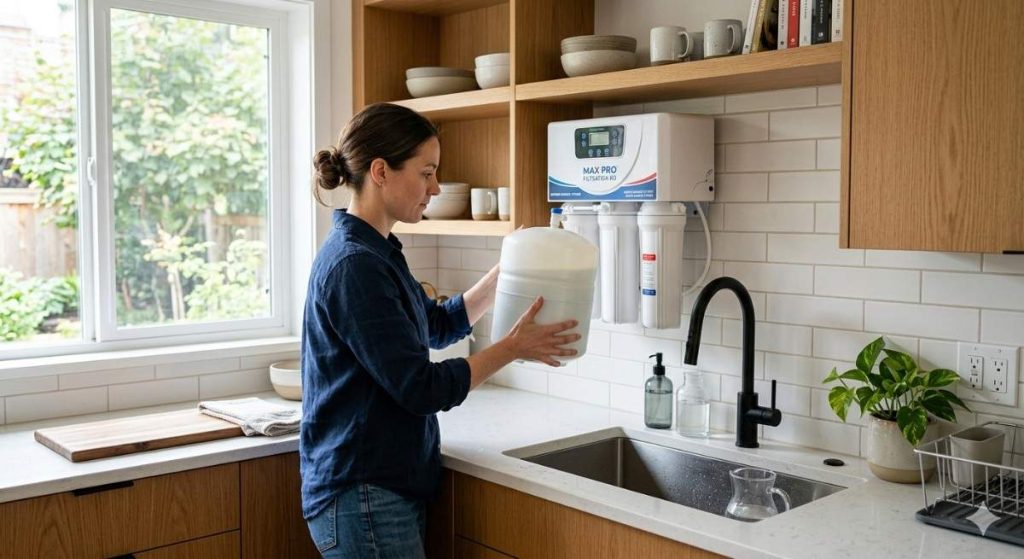
How to Clean RO Water Tank at Home the Right Way
Many homeowners believe that replacing RO filters is enough to maintain their purifier, but the storage tank also needs regular cleaning. Learning how to clean RO water tank at home helps ensure that the purified water stored inside remains fresh and safe for drinking.
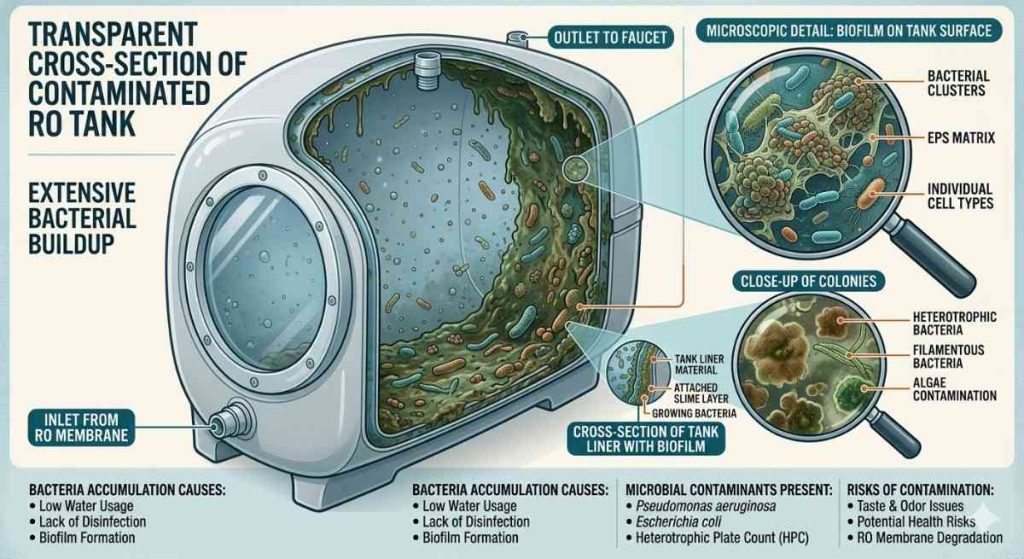
When the storage tank is not cleaned for long periods, bacteria, algae, and sediment may begin to accumulate inside it. This can affect the taste, smell, and overall quality of your drinking water. That is why experts recommend understanding how to clean RO water tank at home properly and making it part of your regular purifier maintenance routine.
By following the correct RO water tank cleaning steps, you can easily remove contaminants, sanitize the tank, and maintain hygienic drinking water for your family.
Common Problems Caused by a Dirty RO Tank
Many homeowners focus only on replacing RO filters but overlook the storage tank. However, the tank is where purified water is stored before consumption, which means any contamination inside the tank can directly affect the quality of drinking water.
When the tank is not cleaned regularly, several problems may occur:
1. Bacterial Contamination
Even though the RO membrane removes most impurities, bacteria can still grow inside the storage tank over time. This usually happens when water stays stored for long periods without proper circulation.
2. Unpleasant Water Taste
A neglected tank may cause the water to develop a stale or metallic taste. This is one of the most common complaints among RO users.
3. Foul Odor from Purified Water
If you notice a mild rotten smell when dispensing water, it may indicate microbial growth inside the tank.
4. Reduced Water Quality
Over time, sediment and biofilm may form on the inner surface of the tank, affecting the freshness of stored water.
Understanding these issues helps highlight why learning how to clean RO water tank at home is an essential part of RO system maintenance.
Why Cleaning Your RO Water Tank Is Important
Many people assume that once water passes through the RO membrane, it stays pure forever. In reality, the RO storage tank can become a place where bacteria and contaminants slowly build up if it is not cleaned regularly.
Here are some reasons why RO purifier tank cleaning is important:
1. Prevent Bacteria Growth
Although RO systems remove most contaminants, the storage tank can still develop bacterial buildup over time, especially if it remains unused for long periods.
2. Maintain Water Taste
A dirty tank often causes water to develop a metallic taste or unpleasant smell, which is a common complaint among RO users.
3. Improve System Efficiency
Sediment buildup inside the tank can reduce water flow and put extra pressure on the RO system.
4. Ensure Safe Drinking Water
Regular cleaning ensures that the purified water stored inside the tank remains fresh, hygienic, and safe for your family.
How a Clean RO Tank Improves Water Quality
One of the biggest benefits of learning how to clean RO water tank at home is improved drinking water quality. When the tank is clean, the purified water remains free from unwanted odors and harmful microorganisms.
A properly cleaned tank also helps maintain the efficiency of the RO filtration process. Over time, sediments or biofilm may accumulate inside the tank, which can compromise water quality. Regular RO purifier tank cleaning ensures that your water purifier continues to deliver fresh and safe water.
If you regularly clean RO tank at home, you can significantly reduce the chances of bacterial contamination and improve the overall taste of your drinking water.
Signs Your RO Tank Needs Cleaning
If you notice any of the following issues, it may be time to clean RO tank at home:
- Bad Smell
If your drinking water smells unusual or slightly rotten, it could be due to bacterial growth in the storage tank.
- Slow Water Flow
Sediment accumulation inside the tank can restrict water flow and reduce output.
- Unusual Taste
A bitter or metallic taste often indicates contamination inside the tank.
- Visible Particles
If you see small particles in purified water, the tank may need cleaning or flushing.
Recognizing these signs early helps you maintain a healthy and efficient water purifier.
Sometimes poor water quality may also occur due to filtration issues. If you are facing this problem, check our guide on TDS not reducing in RO to understand the possible causes and solutions.
How Often Should You Clean Your RO Water Tank
Experts recommend performing RO water purifier cleaning every 3 to 6 months, depending on water usage and water quality.
General guidelines:
- Small households: every 6 months
- Large families: every 3–4 months
- Areas with high TDS water: every 3 months
Regular cleaning not only improves hygiene but also extends the lifespan of your RO system.
Factors That Affect RO Tank Cleaning Frequency
While the general recommendation is to clean the tank every 3–6 months, the actual cleaning schedule can vary depending on several factors.
Water Quality in Your Area
In regions where the water has high TDS levels or heavy contamination, tanks may accumulate deposits faster. In such cases, cleaning the tank every 3 months is recommended.
Daily Water Consumption
Large families tend to use more purified water, which means the tank refills frequently. Although this reduces stagnation, it also increases the chances of sediment buildup over time.
RO System Usage
If your RO purifier remains unused for several days or weeks, the stored water may become stagnant, creating a favorable environment for bacteria growth.
Filter Maintenance
When filters and membranes are replaced regularly, fewer contaminants reach the storage tank, reducing the need for frequent cleaning.
By considering these factors, homeowners can create a custom RO tank maintenance schedule that keeps their purifier performing efficiently.
Tools and Materials Required
Before starting the RO water tank cleaning process, gather the following items:
- Food-grade sanitizer or mild disinfectant
- White vinegar (natural cleaning option)
- Clean microfiber cloth
- Rubber gloves
- Bucket
- Soft sponge or brush
These simple household items are enough for a safe and effective RO water purifier cleaning guide.
Step-by-Step Guide: How to Clean RO Water Tank at Home
Follow these simple RO water tank cleaning steps carefully.
- Step 1: Turn Off the RO System
First, switch off the power supply to the water purifier. Also close the water supply valve connected to the system.
This prevents water from entering the tank during cleaning.
- Step 2: Empty the Storage Tank
Open the RO faucet and allow all the stored water to drain out completely.
This step is important because the tank must be fully empty before cleaning.
- Step 3: Disconnect the Tank
Carefully disconnect the storage tank from the RO system. Most tanks are connected using a simple tube fitting that can be detached manually.
Place the tank on a stable surface while working.
- Step 4: Prepare the Cleaning Solution
You can use one of the following cleaning solutions:
- 1 cup white vinegar + 2 cups warm water
- Food-grade sanitizer mixed with water
This solution helps sanitize RO storage tank surfaces and remove bacterial buildup.
- Step 5: Clean the Inside of the Tank
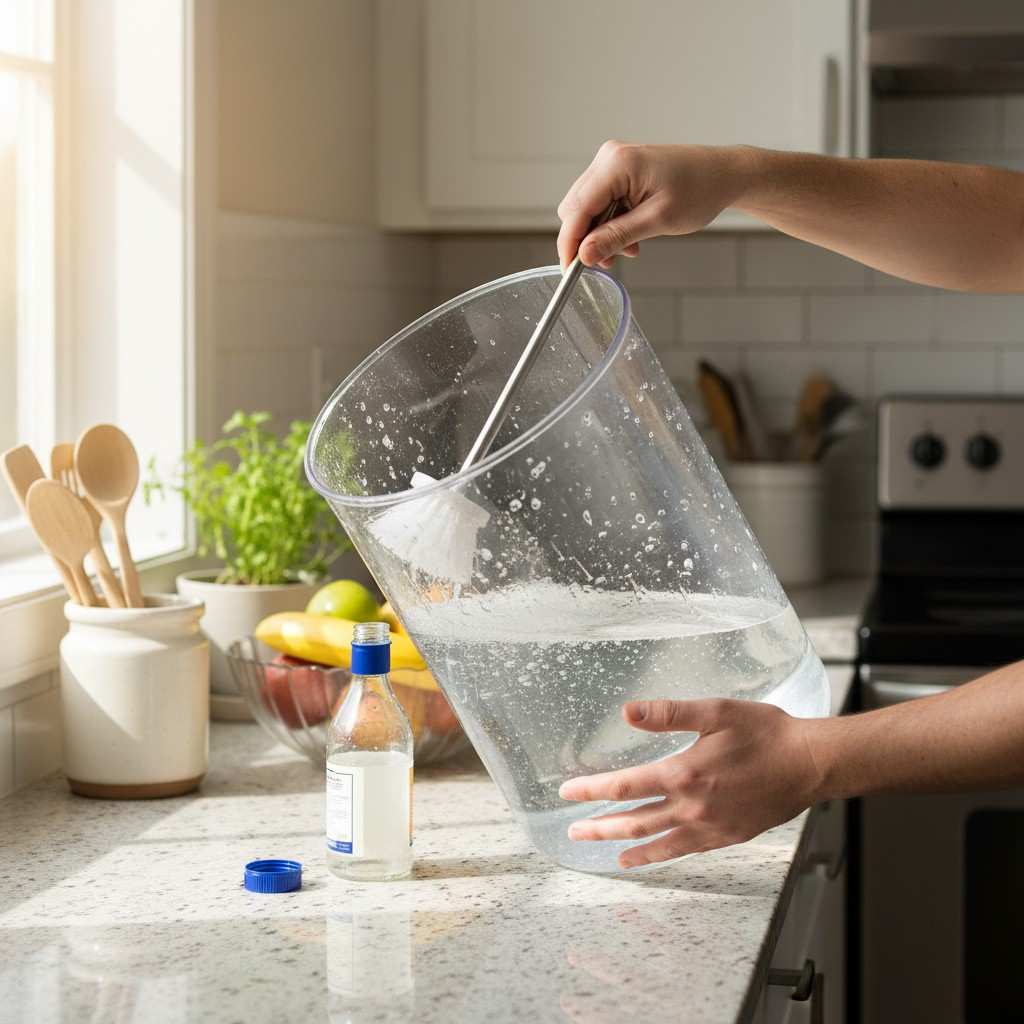
Pour the cleaning solution into the tank and gently swirl it around.
Use a soft brush or cloth to clean the inner surface if accessible.
Make sure the solution reaches all areas inside the tank.
- Step 6: Let the Solution Sit
Allow the cleaning solution to remain inside the tank for 10–15 minutes.
This helps kill bacteria and dissolve deposits.
- Step 7: Rinse the Tank Thoroughly
Empty the tank and rinse it multiple times with clean water.
Ensure that no vinegar or sanitizer residue remains inside the tank.
- Step 8: Reconnect the Tank
Reconnect the tank to the RO system and open the water supply valve.
Turn on the power supply.
Allow the tank to fill completely and then drain the first full tank of water.
This final flushing step ensures that the RO purifier tank cleaning process is complete.
If your purifier produces very little water even after cleaning the tank, the issue might be related to pressure. You can learn more in our article about low water pressure in RO.
Important Tip While Cleaning the RO Tank
While performing the RO water tank cleaning steps, it is important to rinse the tank thoroughly after using any cleaning solution. This ensures that no residue remains inside the tank that could affect the taste of drinking water.
Many homeowners who learn how to clean RO water tank at home prefer using natural cleaning solutions like vinegar because they are safe and effective. Vinegar helps remove mineral deposits, bacteria, and unpleasant odors from the storage tank.
Following these simple steps makes RO water purifier cleaning easier and ensures the tank remains hygienic for everyday use.
Natural Cleaning Alternatives for RO Tanks
If you prefer chemical-free cleaning methods, there are natural solutions that work effectively for RO purifier tank cleaning.
White Vinegar
White vinegar is one of the safest natural disinfectants for RO tanks. Its mild acidity helps remove mineral deposits, bacteria, and unpleasant odors.
Mix one part vinegar with two parts warm water and use it as a cleaning solution.
Baking Soda
Baking soda can help remove stains and neutralize odors inside the tank. It is often used as a secondary cleaning step after vinegar sanitization.
Lemon Solution
Lemon juice contains natural antibacterial properties and leaves a fresh smell inside the tank.
These natural options are especially useful for homeowners who prefer eco-friendly RO water purifier cleaning methods.
Safety Tips While Cleaning RO Tank
While performing RO water purifier cleaning, keep these safety tips in mind:
- Always turn off the power supply before cleaning
- Use only food-grade cleaning solutions
- Wear gloves while handling sanitizers
- Do not use strong chemicals or bleach
- Rinse the tank thoroughly before reconnecting
Following these precautions ensures safe and effective cleaning.
Why Every RO User Should Know How to Clean RO Water Tank at Home
Understanding how to clean RO water tank at home is an essential part of responsible water purifier ownership. While professional servicing is helpful, homeowners can perform basic cleaning themselves to maintain hygiene between service visits.
Regular RO purifier tank cleaning prevents contamination and ensures the purified water stored inside the tank stays fresh. It also helps maintain the lifespan of the RO system and reduces the chances of technical issues.
If you clean RO tank at home every few months, your purifier will continue delivering high-quality drinking water without unpleasant taste or odor.
Common Mistakes to Avoid
Many homeowners unknowingly make mistakes during RO tank maintenance.
Avoid these common errors:
- Using Harsh Chemicals
Strong chemicals can damage the tank and contaminate drinking water.
- Skipping the Final Flush
Failing to flush the system may leave cleaning solution residue in drinking water.
- Cleaning Too Rarely
Ignoring tank maintenance for years can cause severe bacterial buildup.
- Improper Reconnection
Loose connections may cause leaks or pressure problems.
When You Should Call a Professional
Although cleaning RO tank at home is simple, sometimes professional help is required.
Call a technician if:
- The tank has heavy contamination
- You notice unusual system noise
- Water pressure remains low
- TDS levels remain high after cleaning
Professionals can perform complete RO servicing and sanitization for better performance.
Expert Tip from RO Technicians
Professional RO technicians often recommend performing a complete system sanitization at least once a year. This process includes cleaning the storage tank, replacing filters, and flushing internal pipes.
Regular servicing helps identify small issues before they become major problems, such as:
- membrane clogging
- pressure imbalance
- bacterial contamination
Combining regular tank cleaning at home with annual professional servicing ensures the best performance from your RO water purifier.

RO Tank Maintenance Tips
Regular maintenance keeps your RO system working efficiently.
Here are some practical RO tank maintenance tips:
- Clean the tank every 3–6 months
- Replace filters on schedule
- Flush the RO system regularly
- Avoid storing water in the tank for long periods
- Get annual professional servicing
These small habits can significantly improve the lifespan and performance of your RO purifier.
Benefits of Regular RO Tank Cleaning
Maintaining a clean RO storage tank offers several long-term advantages.
Better Drinking Water Quality
Regular cleaning ensures that the purified water remains fresh, hygienic, and free from unpleasant taste or odor.
Improved RO System Performance
When the storage tank is clean, the entire RO system works more efficiently, maintaining steady water pressure and flow.
Longer Lifespan of the Purifier
Proper maintenance reduces stress on internal components such as the RO membrane, filters, and valves.
Reduced Risk of Health Issues
Contaminated tanks can harbor bacteria that may affect drinking water safety. Routine cleaning significantly reduces this risk.
For homeowners who rely on purified water every day, RO tank cleaning is one of the most important maintenance practices.
Conclusion
Understanding how to clean RO water tank at home is an essential skill for every RO purifier owner. Regular cleaning prevents bacterial buildup, improves water taste, and ensures your family receives safe drinking water.
By following the simple RO water tank cleaning steps shared in this guide, you can easily maintain your purifier without needing professional help every time.
Remember, a clean RO tank means cleaner, healthier drinking water for your home. Make tank cleaning part of your routine maintenance schedule and your RO purifier will continue delivering safe water for years.
Knowing how to clean RO water tank at home can make a significant difference in maintaining the quality of your drinking water. A clean storage tank prevents bacterial buildup, improves water taste, and ensures your RO purifier operates efficiently.
By following the simple RO water tank cleaning steps explained in this guide, homeowners can easily perform basic tank maintenance without professional help. Regular RO purifier tank cleaning not only protects your family’s health but also extends the life of your water purifier.
Make it a habit to clean RO tank at home every 3 to 6 months, and your RO system will continue providing safe and fresh drinking water for years to come.