

TDS Not Reducing in RO – Causes, Solutions & Expert Fix Guide
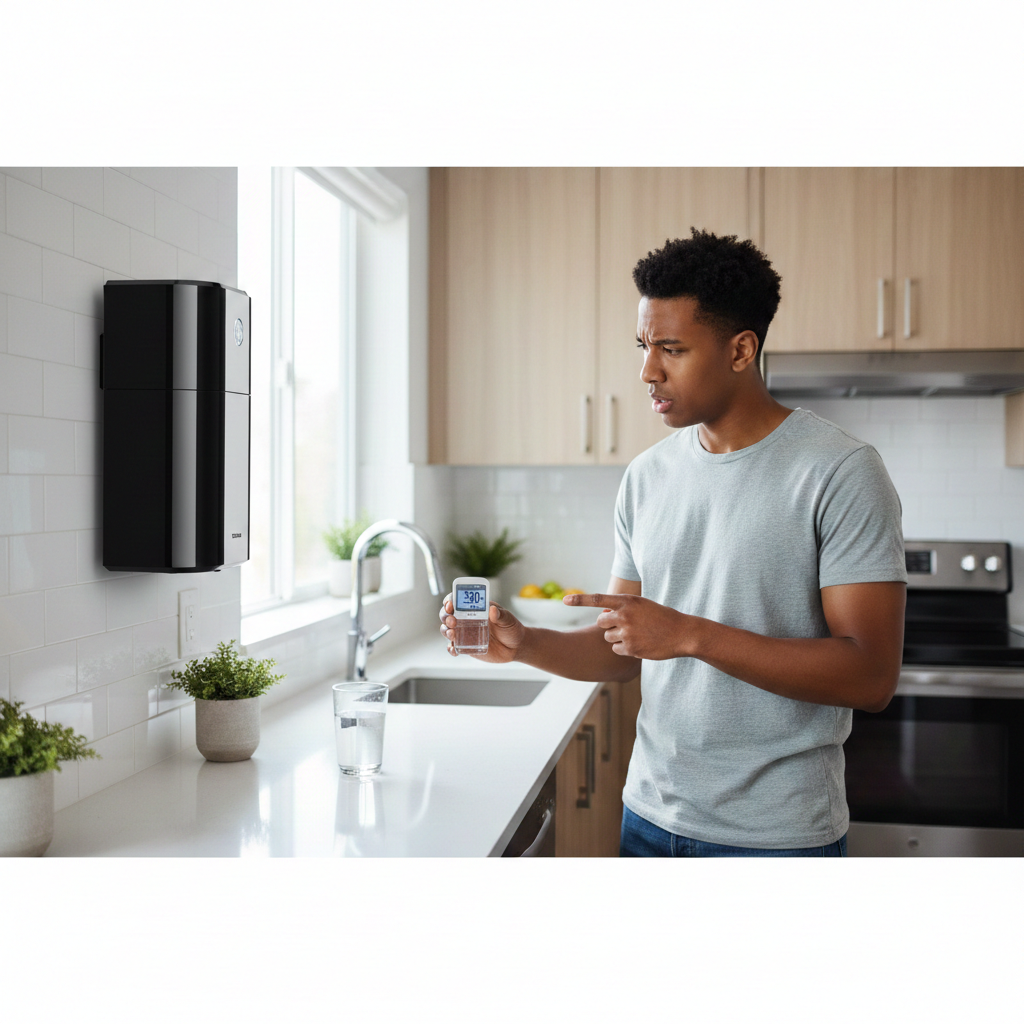
If you recently checked your purifier and noticed TDS not reducing in RO, you’re not alone. This is one of the most common problems homeowners face with water purifiers.
You install an RO system expecting clean, safe drinking water — but instead, the TDS reading remains high, the taste feels salty or bitter, and doubts about water quality start growing.
The good news?
Most RO TDS problems are fixable once you understand the root cause.
In this complete expert guide, you’ll learn:
✔ Why RO is not lowering TDS
✔ How to diagnose the issue at home
✔ Practical solutions that actually work
✔ When you must call an RO technician
This article is written from the perspective of a water purifier technician with 10+ years of experience, so you’ll get real-world advice — not generic internet tips on TDS not reducing in RO.
If you are also noticing taste changes, you may want to read our guide on RO water tastes bad – reasons & solutions.
What is TDS in RO Water?
TDS stands for Total Dissolved Solids.
It measures the amount of dissolved substances present in water, including:
- Salts
- Minerals
- Metals
- Chemicals
- Organic matter
TDS is measured in ppm (parts per million) using a digital TDS meter.
Higher TDS means more impurities in water.
RO purifiers are specifically designed to reduce TDS by removing dissolved contaminants through a semi-permeable membrane.
So when TDS is not reducing in RO, it clearly indicates something is not working correctly inside the purification system, and here we discuss why TDS not reducing in RO.
Understanding the role of purification technology is essential — explore more in our article on Importance of Reverse Osmosis in Today’s Era.
Normal TDS Range After RO Purification
A properly working RO system typically reduces TDS by 80% to 95%.
Here’s a general reference table:
| Input Water TDS | Expected RO Output TDS |
|---|---|
| 300 ppm | 30 – 80 ppm |
| 500 ppm | 50 – 120 ppm |
| 1000 ppm | 100 – 250 ppm |
| 1500+ ppm | 150 – 350 ppm |
For drinking water, the ideal range is usually:
👉 50 to 150 ppm
If your purifier shows high TDS after RO, and TDS not reducing in RO there is likely an internal issue.
How High TDS Affects Health and Water Taste
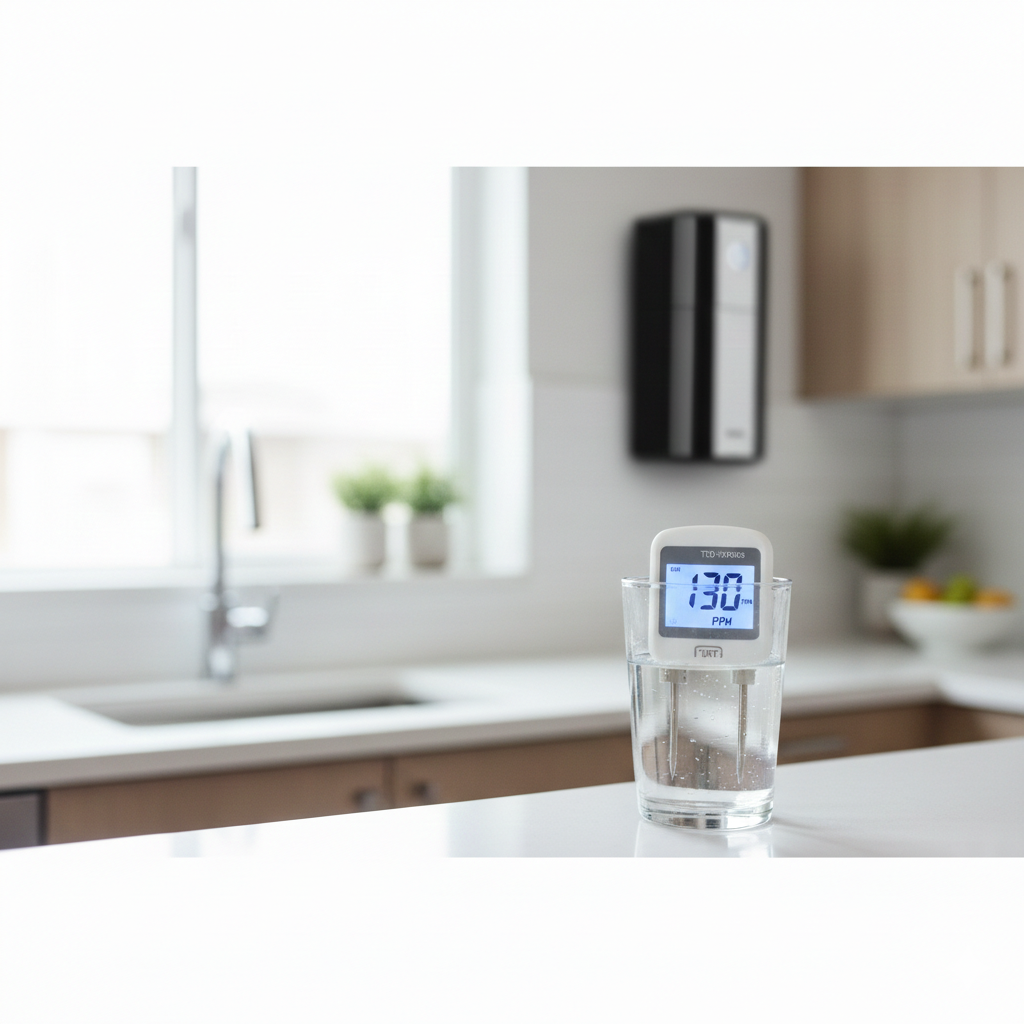
When homeowners notice TDS not reducing in RO, the first concern is usually taste. However, the bigger concern should actually be water safety and long-term health impact.
High TDS water does not always mean dangerous water, but it often indicates the presence of unwanted dissolved substances such as:
- Excess salts
- Heavy metals
- Fluoride
- Nitrates
- Chemical contaminants
- Industrial pollutants
If your RO system is not lowering TDS properly, means TDS not reducing in RO these impurities may remain in drinking water.
Common Signs of High TDS Water
You may notice:
- Salty or bitter taste
- Metallic flavor
- White scaling on utensils
- Soap not lathering properly
- Dry skin or hair after washing
- Chalky residue in kettle
Many customers report RO water taste problems before they even check the TDS reading.
This is why taste changes should never be ignored — they are often early warning signals.
Is Very Low TDS Water Safe?
Another common myth is that lower TDS is always better.
In reality:
- Extremely low TDS (below 20 ppm) may taste flat
- Minerals like calcium and magnesium are beneficial
- Balanced TDS between 50–150 ppm is considered ideal
The goal is not zero TDS — it is safe and balanced water.
Why TDS is Not Reducing in RO? (Main Causes)
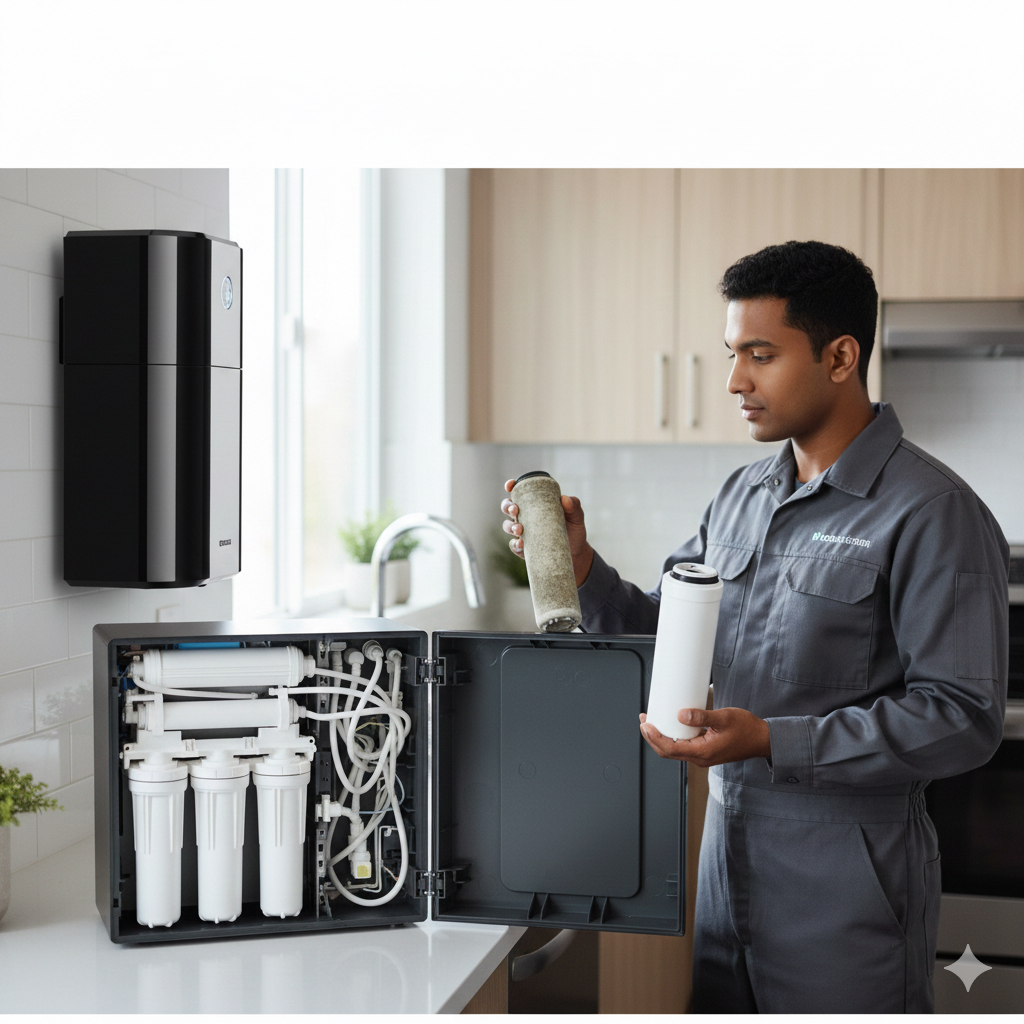
Understanding the cause of TDS not reducing in RO is the first step toward fixing the problem.
Below are the most common reasons technicians encounter.
1. Faulty RO Membrane (Most Common Reason)
The RO membrane is the heart of the purifier.
If it becomes damaged or clogged:
- TDS will remain high
- Water taste may change
- Filtration efficiency drops
A membrane failure is responsible for nearly 70% of RO water TDS problems.
2. Membrane Expired or Overused
RO membranes have a lifespan of:
👉 18 to 36 months (depending on water quality)
If you delay replacement:
- Filtration weakens
- High TDS after RO appears
- Contaminants may pass through
3. Wrong TDS Controller Setting
Modern RO systems include a TDS controller (mixing valve) that adjusts mineral levels.
If set incorrectly:
- Purified water mixes with raw water
- Output TDS increases
This often happens after servicing or installation.
4. High Input Water Pressure Problem
RO membranes require proper pressure to function.
If pressure is too low:
- Filtration efficiency decreases
- RO not lowering TDS properly
If pressure is too high:
- Membrane damage can occur
5. Flow Restrictor Issue
The flow restrictor maintains pressure across the membrane.
If faulty:
- Waste water ratio changes
- Membrane performance drops
- TDS not reducing in RO
6. Bypass Valve Leakage
Some purifiers include bypass or flush valves.
If leaking internally:
- Untreated water mixes with purified water
- TDS rises unexpectedly
7. Incorrect Installation
Wrong pipe connections are more common than people think.
Installation mistakes may include:
- Wrong tubing connections
- Improper pump placement
- Incorrect drain flow direction
8. Very High Source Water TDS
If input water TDS is extremely high (1500+ ppm):
- Standard domestic RO may struggle
- Output TDS remains higher than expected
In such cases, booster pumps or commercial-grade membranes may be needed.
Installation mistakes can also cause leakage problems. You can read our complete troubleshooting guide on Water Leaking from RO Purifier – How to Fix.
How to Check if RO is Working Properly (Step-by-Step Guide)
You can perform a basic diagnostic at home using a TDS meter.
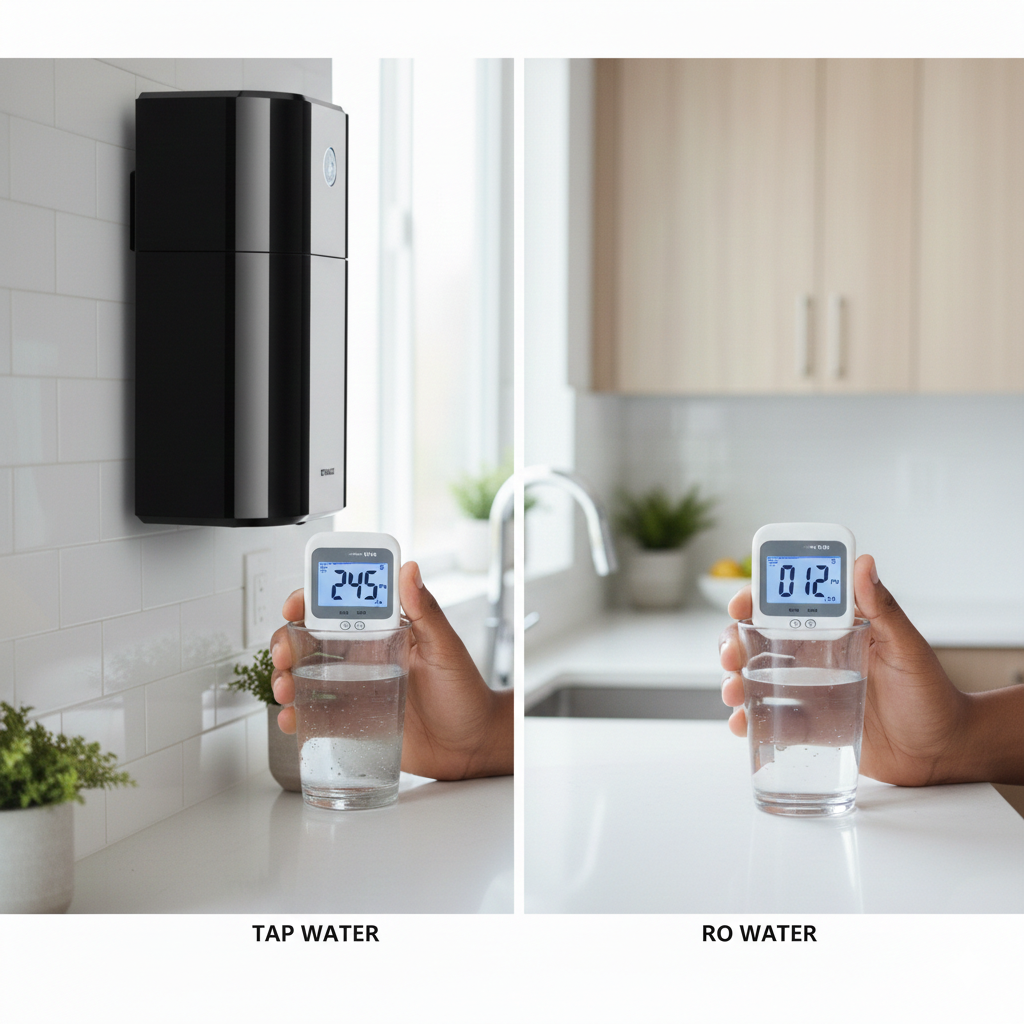
Step 1: Measure Input Water TDS
Check tap water before the purifier.
Step 2: Measure RO Output TDS
Collect purified water and test.
Step 3: Calculate Reduction Percentage
Formula:
Reduction % =
(Input TDS – Output TDS) ÷ Input TDS × 100
A healthy RO should reduce at least 80%.
If not, you likely have an RO membrane problem or internal fault.
Solutions to Fix TDS Not Reducing Problem
Here are practical solutions technicians use.
Replace RO Membrane
If membrane is old or damaged, replacement is the most effective solution.
Typical cost:
- ₹1500 – ₹3500 (domestic RO)
Adjust TDS Controller
A technician can fine-tune mineral mixing to achieve ideal TDS.
Never over-reduce TDS below 30 ppm — it may affect taste and health.
Check Booster Pump Pressure
Ideal pressure range:
👉 60 – 80 psi
Low pressure = poor filtration.
Replace Flow Restrictor
A small component but critical for performance.
Cheap to replace, big impact.
Inspect Internal Leakages
Loose fittings or internal bypass can cause mixing of untreated water.
While fixing your purifier, you can also learn practical tips to reduce water wastage in our guide on Ways to Reuse RO Waste Water at Home.
Advanced Reasons Why RO is Not Lowering TDS
Sometimes the issue is more complex than a simple membrane replacement. Professional technicians often diagnose deeper causes that homeowners may not recognize.
1. Pre-Filter Failure Causing Membrane Damage
Sediment and carbon filters protect the membrane.
If they are clogged or expired:
- Dirt reaches membrane
- Membrane pores get blocked
- Filtration efficiency drops
This is one of the biggest hidden reasons behind recurring RO membrane problems.
2. High Iron or Hard Water Content
Water containing:
- Iron
- Calcium
- Magnesium
- Silica
can reduce membrane life significantly.
In such cases, installing an antiscalant filter or water softener before RO may be necessary.
3. Electrical Issues Affecting Pump Performance
Low voltage or faulty SMPS adapter can reduce pump pressure.
This leads to:
- RO not lowering TDS
- Slow water production
- Continuous drain flow
Many people replace membranes unnecessarily when the real issue is electrical.
4. Incorrect Waste Water Ratio
RO systems maintain a balance between purified water and reject water.
If the reject ratio is disturbed:
- Membrane cannot clean itself
- Contaminants accumulate
- TDS reduction decreases
Technicians check this during servicing using flow measurements.
When to Replace RO Membrane
Replace immediately if you notice:
- TDS not reducing in RO even after servicing
- Bitter or salty taste
- Slow filtration
- Bad odor
- Membrane older than 2 years
Technicians often recommend replacement before complete failure to maintain water quality.
Technician Tips (Professional Insights)
From real service experience:http://www.maxprofiltration.com
✔ Always check input pressure before replacing parts
✔ Membrane failure is often caused by delayed filter replacement
✔ Cheap duplicate membranes fail quickly
✔ High iron water damages membranes faster
✔ Never ignore pre-filter maintenance
A well-maintained RO system lasts longer and performs better.
Advanced Reasons Why RO is Not Lowering TDS
Sometimes the issue is more complex than a simple membrane replacement. Professional technicians often diagnose deeper causes that homeowners may not recognize.
1. Pre-Filter Failure Causing Membrane Damage
Sediment and carbon filters protect the membrane.
If they are clogged or expired:
- Dirt reaches membrane
- Membrane pores get blocked
- Filtration efficiency drops
This is one of the biggest hidden reasons behind recurring RO membrane problems.
2. High Iron or Hard Water Content
Water containing:
- Iron
- Calcium
- Magnesium
- Silica
can reduce membrane life significantly.
In such cases, installing an antiscalant filter or water softener before RO may be necessary.
3. Electrical Issues Affecting Pump Performance
Low voltage or faulty SMPS adapter can reduce pump pressure.
This leads to:
- RO not lowering TDS
- Slow water production
- Continuous drain flow
Many people replace membranes unnecessarily when the real issue is electrical.
4. Incorrect Waste Water Ratio
RO systems maintain a balance between purified water and reject water.
If the reject ratio is disturbed:
- Membrane cannot clean itself
- Contaminants accumulate
- TDS reduction decreases
Technicians check this during servicing using flow measurements.
Warning Signs You Should Not Ignore
Contact a technician if you notice:
⚠ Sudden increase in TDS
⚠ Strange water taste
⚠ Continuous drain water flow
⚠ Low water production
⚠ Noise from pump
⚠ Frequent filter choking
Ignoring early signs leads to expensive repairs later.
Prevention Tips to Maintain Low TDS
Prevention is always cheaper than repair.
Follow these professional tips:
- Replace sediment filter every 6 months
- Replace carbon filter every 6–12 months
- Service RO annually
- Use genuine spare parts
- Install pre-treatment if water is very hard
- Avoid running purifier without water supply
Regular maintenance prevents RO filter not working issues.
Professional Maintenance Schedule Recommended by Experts
Following a proper maintenance schedule can prevent most RO filter not working issues.
Here is a technician-approved maintenance plan:
Every 6 Months
- Sediment filter replacement
- Carbon filter inspection
- Complete internal cleaning
- Pressure check
Every 12 Months
- Carbon filter replacement
- Flow restrictor inspection
- Pump performance test
- Electrical check
Every 24–36 Months
- RO membrane replacement
- Full system sanitization
Routine servicing not only maintains low TDS but also:
- Improves taste
- Increases purifier life
- Reduces repair cost
- Ensures safe drinking water
Troubleshooting Table
| Problem | Possible Cause | Solution |
|---|---|---|
| High TDS after RO | Membrane failure | Replace membrane |
| RO not lowering TDS | Low pressure | Check booster pump |
| RO water taste problem | TDS imbalance | Adjust controller |
| Slow purification | Choked filters | Replace pre-filters |
| Continuous drain | Flow restrictor issue | Replace restrictor |
When to Call RO Service Expert
DIY checks help — but some issues require professional tools.
- TDS remains high after filter change
- Pump not working
- Leakage inside purifier
- Membrane replacement needed
- Installation problems suspected
👉 If your RO TDS is still high, professional servicing may be required.
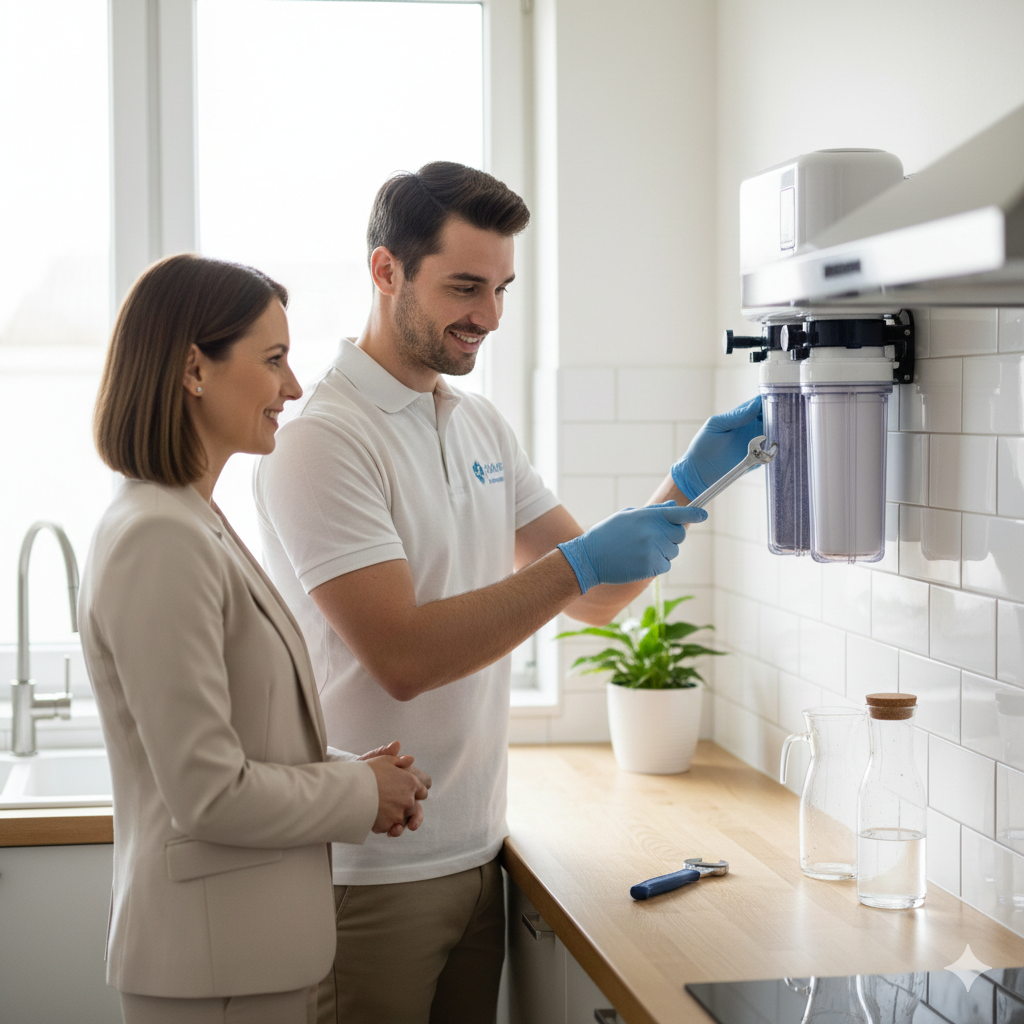
👉 Contact our certified RO technician for inspection.
Mistakes People Make When TDS is Not Reducing in RO
Many homeowners unintentionally worsen the problem by making incorrect decisions.
Avoid these common mistakes:
❌ Ignoring high TDS for months
❌ Using duplicate or low-quality filters
❌ Adjusting TDS controller without knowledge
❌ Running purifier without water supply
❌ Skipping regular servicing
❌ Choosing untrained technicians
Cheap repairs often lead to expensive damage later.
Investing in professional service ensures long-term performance.
If you’re still unsure whether RO is necessary, read our detailed article on 10 Reasons Why Every Home Needs an RO Water Purifier.
Conclusion — Fix High TDS Before It Affects Health
If you notice TDS not reducing in RO, don’t ignore it.
High TDS means your purifier may not be removing harmful impurities effectively.
The most common causes include:
- Membrane failure
- Pressure issues
- Wrong settings
- Installation faults
Timely servicing can restore performance quickly and ensure safe drinking water for your family.
👉 If your RO water TDS problem continues, it’s best to get professional help.
Contact our certified RO service technician today for expert inspection and reliable repair.
Clean water is not a luxury — it’s a necessity.