

Introduction

If your RO not dispensing water, it can be frustrating — especially when you rely on clean drinking water daily. Many homeowners panic when their RO water purifier is not giving water, assuming the machine is damaged or needs replacement. But in most cases, the problem is simple and fixable.
This issue is very common because RO systems depend on multiple components like water pressure, filters, membranes, pumps, and storage tanks. Even a small blockage or power issue can stop water flow completely.
In this guide, you’ll learn:
- Why your RO water not coming out
- Step-by-step RO purifier troubleshooting
- Easy fixes you can try at home
- When to call a technician
- How to prevent this problem in the future
By the end, you’ll know exactly how to fix RO water purifier issues without unnecessary stress.
Many RO issues start with small symptoms like bad smell or leakage before the system completely stops working. You can also read our detailed guide on RO water smells bad — reasons and solutions to identify early warning signs.
If your RO purifier is still not working after basic troubleshooting, you can also get expert assistance from Max Profiltration for professional inspection and repair services.
How an RO Water Purifier Works
To understand the problem, you should first know how an RO purifier works.
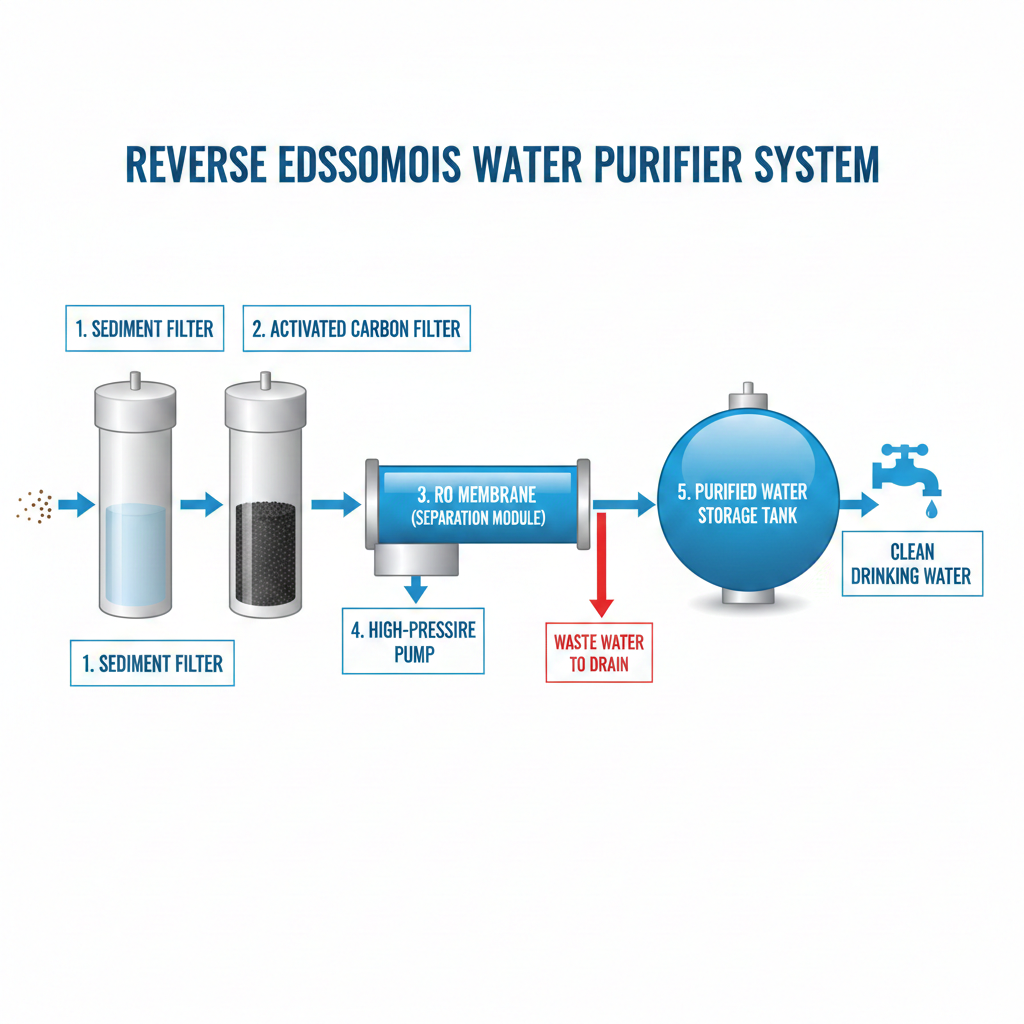
An RO system purifies water through multiple stages:
- Sediment Filter — Removes dust, sand, and particles
- Carbon Filter — Removes chlorine and bad odor
- RO Membrane — Removes dissolved impurities and TDS
- Post Carbon Filter — Improves taste
- Storage Tank — Stores purified water
- Pump — Maintains pressure for filtration
If any of these parts fail, your RO may stop dispensing water.
Main Reasons Why RO Not Dispensing Water
1. No Power Supply
Many RO systems need electricity to operate the pump. If there is no power:
- Pump won’t run
- Water won’t filter
- Tank won’t fill
Common causes:
- Loose plug
- Faulty adapter
- Power outage
- Damaged wiring
2. Low Water Pressure
RO purifiers require sufficient input pressure. If pressure is too low:
- Water cannot pass through the membrane
- Tank won’t fill
- Output stops completely
This often happens in:
- Apartments with weak supply
- Homes using borewell water
- Areas with inconsistent municipal pressure
3. Clogged Filters
Filters accumulate dirt over time. When blocked:
- Water flow reduces
- Pump works harder
- Eventually water stops
Clogged filters are the most common reason for RO not working.
In many cases, clogged filters can also lead to leakage problems due to increased internal pressure. You can also check our step-by-step guide on Water leaking from RO purifier — how to fix for related troubleshooting tips.
4. Faulty Pump
If the booster pump fails:
- No pressure builds inside the system
- Membrane cannot purify water
- RO stops dispensing water
Signs of pump failure:
- No sound from machine
- Vibrations stopped
- Slow filtration earlier
5. Tank Problems
Sometimes the issue is not filtration but storage.
Possible tank issues:
- Tank full of air
- Tank bladder damaged
- Tank valve closed
- Leakage inside tank
6. Air Lock in System
Air trapped inside pipes can block water flow.
This happens after:
- Filter replacement
- Maintenance service
- Long period without use
7. Membrane Blockage
The RO membrane removes dissolved impurities. Over time it can:
- Get clogged with salts
- Stop filtration
- Reduce output
Membrane lifespan is typically 1–2 years depending on water quality.
The lifespan of an RO membrane depends heavily on the input water quality and TDS levels. If you are unsure whether your water needs RO purification, read our article on TDS in RO water — what you should know.
8. Valve or Solenoid Failure
RO purifiers contain small electrical valves that control water flow.
If they fail:
- Water cannot enter the system
- Tank does not fill
- Machine appears dead

Signs Your RO Purifier May Stop Dispensing Water Soon
In many cases, your RO system gives warning signs before it completely stops working. Recognizing these early symptoms can help you prevent sudden breakdowns.
Watch out for these signs:
- Water flow becoming slower than usual
- RO taking too much time to fill the tank
- Strange noises from the pump
- Water taste changing unexpectedly
- Machine turning on and off frequently
- Continuous drainage water without output
If you notice these symptoms, your RO purifier may soon face the RO water not coming out issue. Taking action early can save you repair costs.
Easy Fix Solutions You Can Try at Home
Before calling a technician, try these simple troubleshooting steps.
Step-by-Step RO Purifier Troubleshooting
Step 1: Check Power Supply
- Ensure plug is connected properly
- Test socket with another device
- Check adapter indicator light
Step 2: Check Input Water Supply
- Confirm water is coming from tap
- Ensure inlet valve is open
- Check for pipe bends or blockages
Step 3: Restart the System
- Turn off power
- Wait 5 minutes
- Turn it back on
Sometimes this resets internal pressure.
Step 4: Inspect Storage Tank
- Open tank valve fully
- Shake tank gently
- Listen for water inside
If tank feels empty, filling may be the issue.
Step 5: Flush Filters
If filters are old:
- Replace sediment filter
- Replace carbon filter
This alone solves many cases of RO water purifier not giving water.
If these steps do not solve the issue, it may indicate an internal component fault that requires professional diagnosis. You can book a service visit directly through our website for quick assistance.
Advanced Troubleshooting Steps (If Basic Fixes Don’t Work)
If simple checks didn’t solve the problem, you can try a few advanced steps carefully.
1. Check the RO Pump Function
Turn on the machine and listen closely:
- If pump makes humming sound → working
- If silent → possible pump failure
- If vibrating excessively → pressure issue
A damaged pump is one of the major RO not working reasons.
2. Inspect the High-Pressure Switch
The high-pressure switch controls when the pump stops after tank fills.
If faulty:
- Tank won’t fill
- RO stops dispensing water
- Machine may shut off early
This component is inexpensive but critical.
3. Examine the Flow Restrictor
The flow restrictor controls wastewater flow. If blocked:
- Pressure imbalance occurs
- Membrane cannot function
- Water output stops
Cleaning or replacing it often restores normal function.
4. Check for Pipe Bends or Blockages
Sometimes the issue is very simple:
- Bent pipes
- Mineral deposits
- Dirt clogging connectors
Straightening or cleaning pipes may fix your RO water purifier not giving water problem instantly.
Proper maintenance plays a big role in preventing such issues. If you want to understand the long-term benefits of using an RO system, you can explore our article on 10 reasons why every home needs an RO water purifier.
Safety Tips
- Always switch off power before opening RO
- Avoid touching electrical parts with wet hands
- Do not open membrane housing without knowledge
- Use genuine spare parts only

When to Call a Technician
Call a professional if:
- Pump is not running
- Water pressure is extremely low
- RO membrane needs replacement
- Electrical parts are damaged
- Water leakage is present
- Problem continues after basic troubleshooting
Ignoring issues can damage expensive components.
In such situations, it’s best to contact trained professionals who can accurately identify the problem and prevent further damage to your purifier.
Cost of Repair — What You Can Expect
Many homeowners worry about repair expenses, but most RO problems are affordable to fix.
Here’s an approximate cost idea (may vary by location):
| Component | Estimated Cost |
|---|---|
| Sediment / Carbon Filter | Low |
| RO Membrane | Medium |
| Pump Replacement | Medium to High |
| Solenoid Valve | Low to Medium |
| Tank Replacement | Medium |
| Full Service | Low |
Important tip:
Regular servicing is always cheaper than emergency repair.
Ignoring maintenance often leads to expensive component damage.
Technician Pro Tips (Expert Advice)
As someone with 10+ years of experience, here are some insider tips:
✔ Replace pre-filters every 6–8 months
✔ Service RO before summer season
✔ Install pressure booster if supply is weak
✔ Never run RO without water supply
✔ Use TDS controller properly
Real example:
One customer complained their RO stopped working completely. The problem was only a clogged sediment filter worth a few hundred rupees. Regular maintenance could have prevented it.
Regular servicing not only prevents breakdowns but also reduces water wastage. You may also find our guide on Ways to reuse RO waste water at home helpful for saving water efficiently.
Real-Life Common Mistakes People Make
Over the years, I’ve seen homeowners unknowingly cause RO problems themselves. Avoid these mistakes:
- Running RO without water supply
- Not replacing filters for years
- Using duplicate spare parts
- Ignoring unusual noise
- Keeping RO in hot or dusty area
- Switching off power frequently
One real case:
A family complained their RO not dispensing water for 2 days. After inspection, the inlet valve was simply closed during cleaning and never reopened.
Sometimes the solution is surprisingly simple.
How to Prevent This Problem in the Future
Prevention is easier than repair.
Follow these tips:
- Schedule maintenance every 6 months
- Replace filters on time
- Keep RO in clean area
- Avoid using hard water without pre-treatment
- Install pressure regulator if needed
- Check tank regularly
Proper care increases RO lifespan significantly.
Does Water Quality Affect RO Performance?
Yes — water quality plays a huge role in RO functioning.
If your input water contains:
- High TDS
- Excess salts
- Mud or sand
- Iron contamination
- Hard minerals
Then filters and membranes clog faster, leading to RO water not coming out issues.
Homes using borewell water face this problem more frequently than municipal water users.
Installing a pre-filter or sediment system can improve RO lifespan significantly.
How Long Does It Take for RO Tank to Fill?
Many people assume their RO Not Dispensing Water RO is not working when it’s actually just filling slowly.
Typical filling time:
- Normal pressure → 1 to 2 hours
- Low pressure → 3 hours or more
- After filter change → longer time initially
If tank does not fill even after several hours, then troubleshooting is required.
FAQs — RO Not Dispensing Water
1. Why is my RO purifier running but not giving water?
This usually happens due to clogged filters, low pressure, or tank issues.
2. Can I fix RO not dispensing water at home?
Yes, many problems like power issues, blocked filters, and tank valves can be fixed easily.
3. How do I know if RO pump is faulty?
If there is no vibration or sound when powered, pump may be damaged.
4. How long does an RO membrane last?
Typically 12–24 months depending on water quality and usage.
5. Why is my RO tank not filling?
Possible reasons include low pressure, membrane blockage, or faulty valve.
6. Is low water pressure harmful for RO?
Yes, RO requires adequate pressure to function properly.
7. Should I repair or replace my RO?
If repair cost exceeds 50% of new unit cost, replacement may be better.
8. Why is my RO making noise but not giving water or RO Not Dispensing Water?
This usually indicates pump pressure problems, clogged filters, or membrane blockage.
9. Can a full tank stop RO from dispensing water?
Yes. If tank air pressure is incorrect or bladder is damaged, water may not come out even when tank is full.
Quick Checklist — RO Not Dispensing Water
Before calling service, check this list:
✔ Power supply is connected and working
✔ Water inlet valve is open properly
✔ Input water pressure is sufficient
✔ RO filters are not clogged or expired
✔ Storage tank valve is open
✔ No pipe bends or blockages present
✔ Booster pump is running normally
✔ No visible leakage in the system
✔ RO membrane is not blocked
✔ Solenoid valve is functioning correctly
This quick inspection solves many cases without technician help if RO Not Dispensing Water.
Pro Tip
If your RO still isn’t working after this checklist, professional servicing may be required to prevent further damage.
Understanding the importance of water purification can help you maintain your system better. You can also read our article on Importance of reverse osmosis in today’s era to learn more about modern purification technologies.
Conclusion — RO Not Dispensing Water
If your RO not dispensing water, don’t panic. Most problems are minor and easily fixable with basic RO purifier troubleshooting. Issues like clogged filters, low pressure, or tank faults are common and affordable to repair.
However, regular maintenance is the key to avoiding breakdowns or if your RO Not Dispensing Water.
If your RO Not Dispensing Water or RO still isn’t working, it’s best to book a professional service to prevent further damage and ensure safe drinking water for your family.
