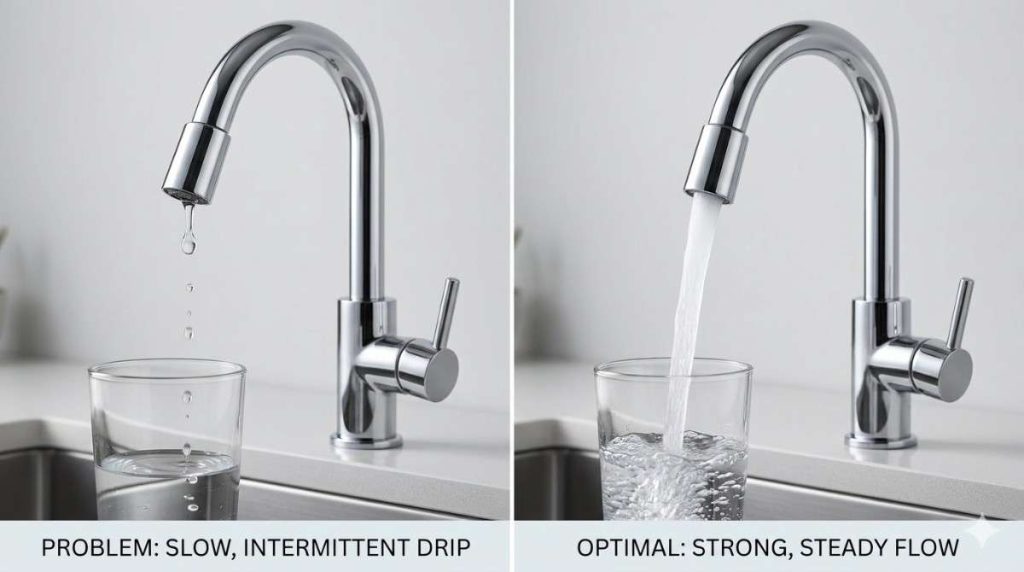
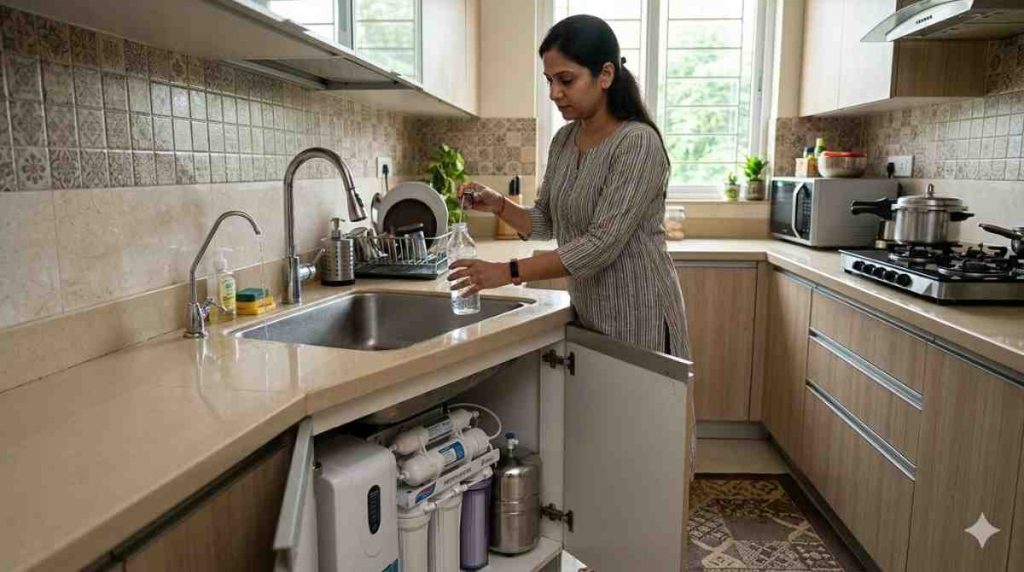
Have you ever walked into your kitchen early in the morning, turned on your RO tap, and… nothing?
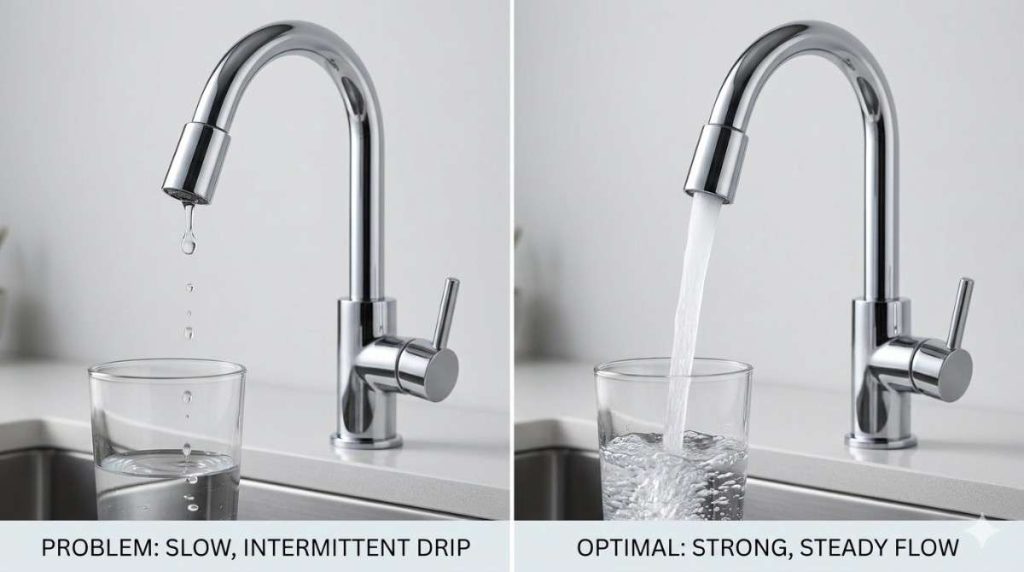
Just a thin, slow trickle.
You wait.
The bottle fills painfully slowly.
Or worse — your RO not filling tank issue leaves you with no water at all.
If your RO water flow is slow, or your RO water coming slowly, you’re not alone. This is one of the most common complaints Indian households face with water purifiers.
The good news?
Most cases of Low Water Pressure in RO can be fixed quickly — if you know what to check.
In this complete guide, we’ll explain:
- Why your RO purifier low pressure problem happens
- 9 expert solutions that actually work
- When you can fix it yourself
- When to call a technician
- How to prevent it from happening again
Let’s solve this properly.
Common Symptoms of Low Water Pressure in RO Systems
Before fixing the problem, it helps to identify whether your purifier is actually suffering from Low Water Pressure in RO or if the issue lies somewhere else in the system.
Many homeowners first notice the problem during their daily routine. For example, you might open the RO tap to fill a bottle and realize that the RO water flow is slow. What used to take a few seconds now takes several minutes.
Here are some common symptoms that indicate your RO system is struggling with pressure problems:
1. RO Tank Takes Too Long to Fill
Normally, an RO purifier storage tank fills within 1 to 2 hours depending on water pressure and tank size. If your RO not filling tank properly or taking 3–4 hours, it usually means pressure inside the filtration system has dropped.
2. Water Comes Out Very Slowly
If the RO water coming slowly from the faucet even when the tank is full, the issue could be related to tank pressure imbalance, blocked filters, or pipe restrictions.
3. Continuous Water Drain from Waste Pipe
Another common sign of RO purifier low pressure problem is when the purifier keeps draining water without storing enough in the tank. This often happens when the membrane cannot operate efficiently due to insufficient pressure.
4. Pump Running Constantly
If your purifier uses a booster pump, you may notice it running continuously for long periods. This can indicate a RO booster pump problem or insufficient incoming pressure from the main water supply.
5. Reduced Water Production
A healthy RO system should produce enough purified water for daily drinking and cooking needs. If your purifier suddenly produces much less water than usual, pressure loss may be the cause.
Recognizing these symptoms early can help you fix low water pressure in RO before it turns into a bigger and more expensive repair issue.
Why Is My RO Water Flow So Slow?
Before fixing anything, it’s important to understand the root cause.
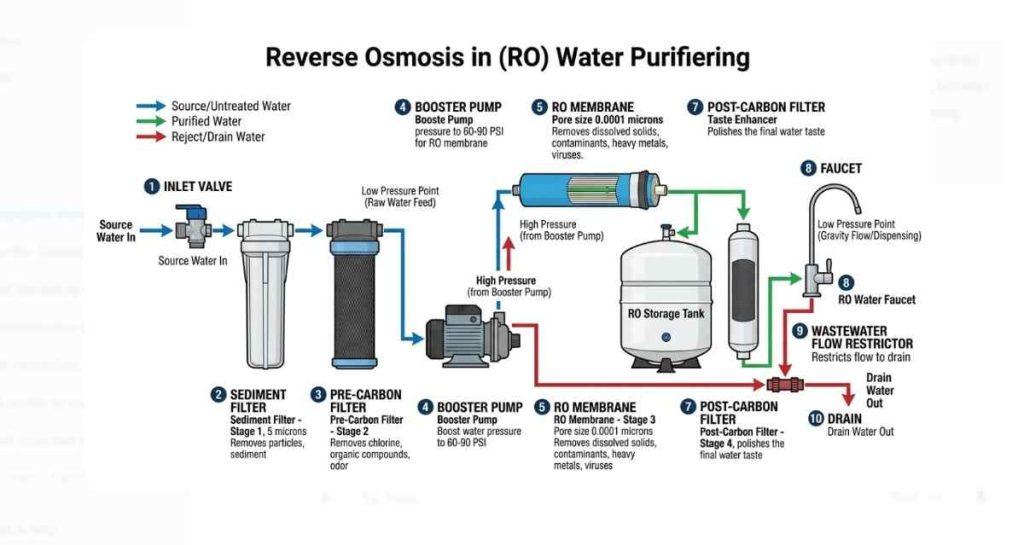
An RO system works by pushing water through multiple filters and an RO membrane using pressure. If pressure drops anywhere in the system, performance drops.
Here are the most common reasons for Low Water Pressure in RO:
- Clogged sediment filter
- Blocked carbon filter
- Choked RO membrane
- Weak booster pump
- Low water supply pressure
- Air blockage
- Tank pressure imbalance
- Faulty inlet valve
- Pipe leakage
In India, high TDS levels, dust, rust, and municipal supply fluctuations make this problem even more common.
Now let’s fix it step by step.
9 Expert Solutions to Fix Low Water Pressure in RO
1. Clogged Sediment Filter
Why It Happens
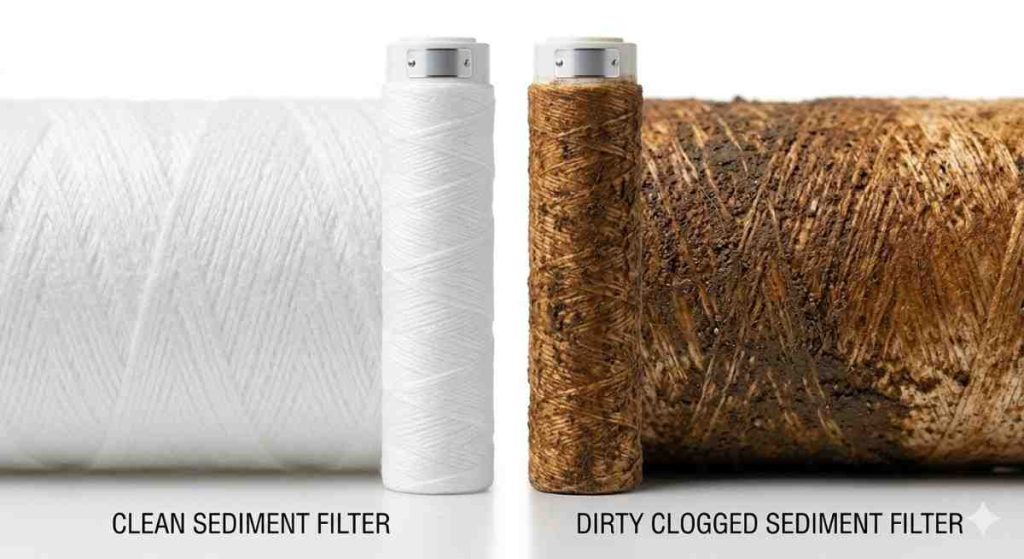
The sediment filter removes dirt, sand, and rust particles. In Indian homes, especially with borewell water, this filter gets clogged quickly.
When blocked, water cannot pass properly — leading to RO water flow slow issue.
Signs
- Water flow gradually reduced over weeks
- Filter looks brown or dirty
- Tank filling time increased
Step-by-Step Solution
- Turn off water supply
- Open filter housing
- Check sediment filter
- Replace if dirty
Sediment filters usually need replacement every 3–6 months.
When to Call a Technician
If housing is stuck or leaking after replacement.
2. Blocked Carbon Filter
Why It Happens
The carbon filter removes chlorine, bad smell, and chemicals. Over time, it gets saturated.
A blocked carbon filter restricts flow and causes RO purifier low pressure problem.
Signs
- Slow water flow
- Bad taste or smell
- System making unusual sound
Step-by-Step Solution
- Replace carbon filter every 6–12 months
- Flush system after replacement
When to Call a Technician
If pressure does not improve after filter change.
3. Choked RO Membrane
Why It Happens
The RO membrane is the heart of your purifier. High TDS water, iron, and hardness clog it over time.
This is a major cause of Low Water Pressure in RO.
Signs
- RO not filling tank
- Very slow water output
- High TDS in output water
Step-by-Step Solution
- Check TDS levels
- Replace membrane if TDS rejection drops
- Always replace sediment & carbon filters before membrane
When to Call a Technician
Membrane installation should ideally be done by a trained professional.
4. Faulty Booster Pump
Why It Happens
Most Indian homes require a booster pump to maintain ideal pressure. If the pump weakens, water flow drops.
This leads to RO booster pump problem.
Signs
- Pump not making sound
- Tank not filling
- Extremely slow output
Step-by-Step Solution
- Check power supply
- Inspect wiring
- Replace faulty pump
When to Call a Technician
Pump replacement requires electrical handling — always call a service expert.
5. Low Inlet Water Pressure
Why It Happens
Municipal water supply pressure fluctuates.
An RO system typically needs 40–60 PSI.
If pressure drops below 30 PSI, you’ll face RO water coming slowly.
Signs
- Whole house water pressure low
- RO works fine when motor tank is full
Step-by-Step Solution
- Install pressure pump
- Use overhead tank supply
- Install pressure regulator
When to Call a Technician
For pressure pump installation.
6. Kinked or Leaking Pipe
Why It Happens
RO pipes are thin. If bent or damaged, flow reduces.
Signs
- Visible bends
- Water leakage
- Air bubbles in pipe
Step-by-Step Solution
- Straighten pipe
- Replace damaged tubing
- Tighten connectors
When to Call a Technician
If internal leakage is suspected.
7. Air Lock in System
Why It Happens
After filter replacement, air can get trapped inside.
Signs
- Gurgling sound
- Interrupted water flow
Step-by-Step Solution
- Turn off system
- Open tap for 5 minutes
- Restart unit
When to Call a Technician
If air lock persists.
8. Tank Pressure Issue
Why It Happens
RO storage tanks use internal air pressure.
If pressure drops, water won’t dispense properly.
Signs
- Tank feels full but no water
- Water comes very slowly
Step-by-Step Solution
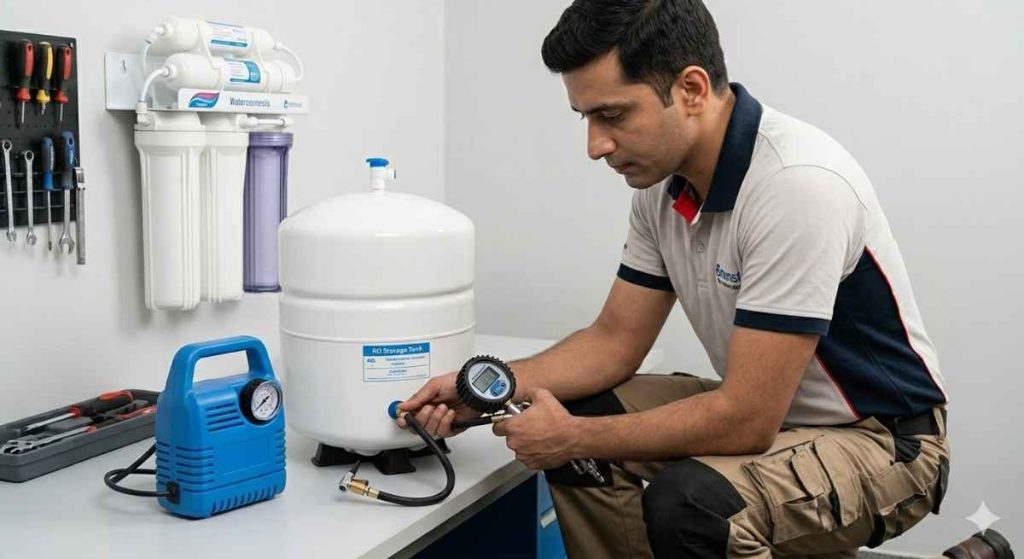
- Check tank pressure (should be 7–8 PSI empty)
- Refill air using air pump
When to Call a Technician
Improper pressure setting can damage tank.
9. Faulty Inlet Solenoid Valve
Why It Happens
The inlet valve controls water entry.
If faulty, water supply gets restricted.
Signs
- No water intake
- Clicking sound but no flow
Step-by-Step Solution
- Replace inlet valve
- Check electrical connections
When to Call a Technician
Always — involves wiring.
Valve replacement requires professional handling.
5-Minute DIY Test to Check RO Water Pressure at Home
Step 1: Check Household Water Pressure
Open a normal kitchen tap and observe the flow.
If all taps in your house have weak pressure, the problem is likely related to the municipal supply or overhead tank.
Step 2: Observe RO Tank Filling Time
Turn on the RO system and note how long it takes to fill the storage tank.
Normally it should take 1–2 hours.
If it takes longer than 3 hours, there may be a RO purifier low pressure problem.
Step 3: Check Waste Water Flow
Look at the reject water pipe of the purifier.
If wastewater is flowing continuously while very little purified water is produced, the RO membrane may be clogged.
Step 4: Listen to the Booster Pump
If your purifier uses a pump, listen carefully.
A healthy pump produces a steady humming sound.
If the pump is silent or making irregular noise, you may have a RO booster pump problem.
Step 5: Check Filters
Open the filter housing and inspect the sediment filter.
If it appears dark brown or filled with dirt, it may be blocking water flow.
Performing this quick test can help you understand how to fix low water pressure in RO without unnecessary guesswork.
How Much Water Pressure Does an RO Need?
For optimal performance:
- Ideal range: 40–60 PSI
- Minimum required: 30 PSI
- Below 20 PSI: System may stop working
Low pressure directly causes Low Water Pressure in RO issues.
If you live in an apartment or top floor, installing a booster pump is often necessary.
How Water Pressure Affects RO Purifier Performance
Water pressure plays a critical role in the functioning of any reverse osmosis purifier. The RO membrane works by forcing water through microscopic pores that block contaminants, heavy metals, and dissolved salts.
For this filtration process to work effectively, a certain amount of water supply pressure is required.
When pressure drops, several problems can occur:
Poor Filtration Efficiency
Low pressure means the RO membrane cannot push water through the filtration layers effectively. This reduces purification efficiency and may allow higher TDS levels in the output water.
Slower Water Production
One of the most noticeable results of Low Water Pressure in RO is slower water production. This is why users often complain that their RO water flow is slow or the storage tank takes too long to fill.
Increased Membrane Damage
Ironically, low pressure can also shorten the lifespan of the membrane. When pressure is insufficient, the membrane remains exposed to contaminants longer than intended, leading to clogging.
Higher Wastewater Ratio
RO purifiers naturally reject some water during filtration. However, when pressure is too low, the system may waste even more water because the membrane cannot operate efficiently.
This is why maintaining proper pressure — usually 40–60 PSI — is essential for optimal purifier performance.
If your home frequently experiences low municipal pressure, installing a booster pump can dramatically improve filtration speed and overall efficiency.
When Should You Replace Filters?
For Indian water conditions:
| Component | Replacement Time |
|---|---|
| Sediment Filter | 3–6 months |
| Carbon Filter | 6–12 months |
| RO Membrane | 18–24 months |
| Booster Pump | 2–4 years |
Regular replacement prevents RO purifier low pressure problem and increases purifier life.
Prevent Low Water Pressure in RO (Maintenance Checklist)
Follow this simple checklist:
✔ Replace filters on time
✔ Get servicing every 6 months
✔ Check inlet pressure regularly
✔ Clean storage tank yearly
✔ Use original spare parts
✔ Monitor TDS levels
Preventive maintenance costs far less than emergency repairs.
You can learn practical ways to reuse RO reject water at home in this detailed guide:
https://maxprofiltration.online/ways-to-reuse-ro-waste-water-at-home/
FAQs (Schema Friendly)
1. Why is my RO water coming slowly?
It may be due to clogged filters, low inlet pressure, or a faulty booster pump.
2. How to fix low water pressure in RO at home?
Check sediment filter, carbon filter, and pipes first. Replace clogged components.
3. Can low water pressure damage RO membrane?
Yes. Insufficient pressure reduces filtration efficiency and can damage the membrane over time.
4. How long does an RO tank take to fill?
Typically 1–2 hours depending on pressure and capacity.
5. Does high TDS cause low pressure?
Indirectly yes. High TDS clogs the RO membrane faster.
6. What PSI is required for RO purifier?
Minimum 30 PSI, ideal 40–60 PSI.
7.Why is my RO purifier producing water slowly?
Your RO purifier may produce water slowly due to clogged filters, a choked RO membrane, low inlet water pressure, or a faulty booster pump. Replacing filters on time and ensuring proper water pressure can usually solve the issue
Why Regular RO Servicing Prevents Pressure Problems
Many households only service their purifier when something stops working. Unfortunately, by that time the problem may already be affecting multiple components.
Regular maintenance is one of the easiest ways to prevent Low Water Pressure in RO and extend the life of your purifier.
During professional servicing, technicians typically:
- Inspect the sediment filter for clogging
- Check the carbon filter condition
- Measure output TDS levels
- Inspect the RO membrane performance
- Test booster pump pressure
- Check pipe connections and leaks
- Clean the storage tank
This preventive inspection helps identify small issues before they turn into serious problems like RO not filling tank or severe RO purifier low pressure problem.
Experts generally recommend servicing your purifier every 6 months, especially in areas with high TDS or borewell water.
Regular servicing not only restores water pressure but also ensures your family continues to get safe and healthy drinking water every day.
If you want professional inspection or RO maintenance, you can check the services offered by Max Pro Filtration at
https://maxprofiltration.com/. The company provides domestic and commercial RO systems and professional maintenance services to ensure long-term purifier performance.
Conclusion
Dealing with Low Water Pressure in RO can be frustrating — especially when your family depends on safe drinking water every day.
The good news?
Most issues are easy to identify and fix.
Whether it’s a clogged sediment filter, blocked carbon filter, weak booster pump, or low water supply pressure — timely maintenance can solve the problem.
Don’t ignore slow water flow.
Small issues today can become costly repairs tomorrow.
If your RO not filling tank or your RO water flow slow issue continues even after basic checks, it’s best to get professional inspection.
Safe water means a safe family.
Need Expert RO Service?
If you’re facing persistent RO purifier low pressure problem, our trained technicians can diagnose and fix it quickly using genuine spare parts.
Book your RO service today and restore full water flow without stress.
For professional help, you can visit RO purifier installation and service at https://maxprofiltration.com/