

Introduction of why ro water flow become slow
You turn on your RO purifier to fill a glass of water, but the water is coming out very slowly. What used to take a few seconds now takes minutes.
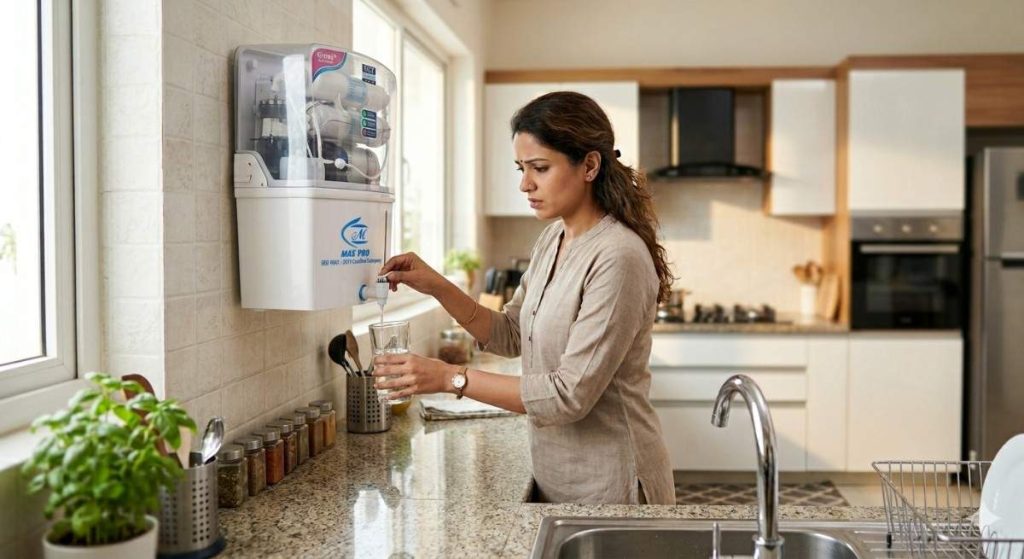
If you’re facing this issue, you’re not alone. Many homeowners notice that their RO purifier water flow becomes slow after some months of use.
Slow RO water flow can happen due to several reasons such as clogged filters, low water pressure, high TDS levels, or a faulty membrane. The good news is that most of these problems are easy to identify and fix.
In this guide, we will explain:
- Why RO water flow becomes slow
- The most common causes
- Simple troubleshooting steps
- Maintenance tips to keep your purifier working properly
Many homeowners search online to understand why RO water flow becomes slow, especially when the purifier suddenly starts taking longer to fill a glass or bottle.
If your purifier is producing water very slowly, it may need professional RO water purifier service and repair to restore normal water flow.
https://maxprofiltration.com/
What is Normal RO Water Flow?
A properly functioning RO purifier should provide steady water flow and fill the storage tank within 1–2 hours, depending on the model and water pressure.
Normally:
- Filling a glass should take 5–10 seconds
- The storage tank should fill in 1–3 hours
- Water flow should be consistent and smooth
If your RO purifier is taking much longer to fill the tank or producing very slow water flow, there may be an underlying issue that needs attention.
Understanding normal performance helps you quickly identify why RO water flow becomes slow and whether the purifier needs maintenance.
Top Reasons Why RO Water Flow Becomes Slow
Understanding the reasons for slow RO water flow helps you diagnose the problem quickly.
1. Clogged RO Filters
RO purifiers use multiple filters such as:
- Sediment filter
- Carbon filter
- Pre-filter
Over time, these filters collect dirt, sand, rust, and impurities from water.
When filters become clogged:
- Water flow decreases
- The system works harder
- Tank filling becomes slow
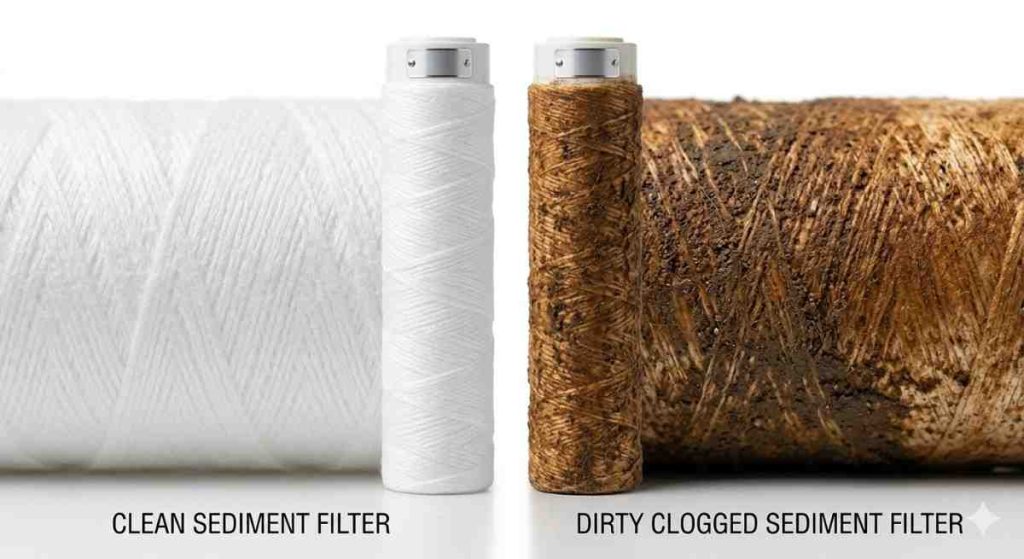
Solution:
Replace the filters every 6–12 months depending on water quality.
One of the most common reasons why RO water flow becomes slow is clogged filters that block the smooth passage of water through the purifier.
A damaged or clogged membrane is another major reason why RO water flow becomes slow even when other components are functioning properly.
2. Low Water Pressure
Reverse Osmosis systems require adequate water pressure to push water through the RO membrane.
If the input pressure is too low:
- Water production becomes slow
- Tank filling takes longer
- Water output reduces significantly
Common causes of low pressure include:
- Weak municipal water supply
- Blocked inlet valve
- Pressure regulator issues
Solution:
Install a booster pump if water pressure is consistently low.
If your home has weak inlet pressure, this could be the main reason why RO water flow becomes slow in many households.
3. High TDS Level
High Total Dissolved Solids (TDS) in water means the purifier must work harder to remove impurities.
When TDS is very high:
- Filtration process slows down
- RO membrane works harder
- Water production decreases
This is common in areas with hard groundwater.
Solution:
Check your water TDS regularly and service the purifier when needed.
4. Faulty RO Membrane
The RO membrane is the heart of the purification system.
It removes:
- Heavy metals
- Chemicals
- Dissolved salts
- Harmful contaminants
However, after prolonged use the membrane can:
- Get clogged
- Become damaged
- Lose efficiency
When this happens, water flow becomes slow.
Solution:
Replace the RO membrane every 2–3 years depending on usage and water quality.
A damaged or clogged membrane is another major reason why RO water flow becomes slow even when other components are functioning properly
5. Storage Tank Problems
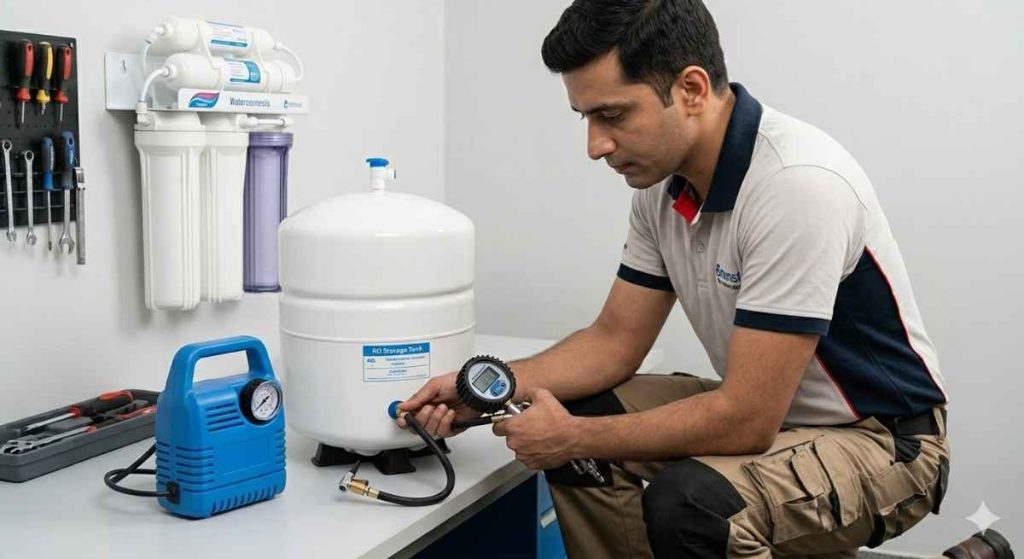
Sometimes the issue is not the filters but the RO storage tank.
Possible tank issues include:
- Low air pressure in tank
- Tank bladder damage
- Sediment buildup inside tank
If the tank pressure drops, water flow from the faucet becomes weak.
Solution:
Check the tank pressure and clean or replace the tank if necessary.
6. Choked Flow Restrictor
The flow restrictor controls how much water goes to the drain during filtration.
If it gets clogged:
- Water flow becomes unbalanced
- Filtration slows down
- Tank filling becomes slow
Solution:
A technician can clean or replace the restrictor.
If your home has weak inlet pressure, this could be the main reason why RO water flow becomes slow in many households.
7. Air Trapped in the System
Sometimes air enters the RO system during:
- Filter replacement
- Maintenance work
- Installation
Air bubbles can block water flow temporarily.
Solution:
Run the purifier for a few minutes to remove trapped air.
How Water Quality Affects RO Purifier Performance
Another important factor that many homeowners overlook is the quality of the input water. The performance of any RO purifier depends heavily on the condition of the water entering the system.
In many parts of India, groundwater contains:
- High TDS levels
- Excess minerals
- Sand and sediments
- Rust from pipelines
- Chemical contaminants
When the incoming water contains too many impurities, the purifier has to work much harder to remove them. Over time, this puts additional pressure on the filters and membrane, which can eventually reduce the overall water flow rate.
For example:
- Hard water can clog filters quickly.
- High TDS water slows down the filtration process.
- Sediments and dirt block the pre-filters.
This is why households in areas with poor water quality often experience slow RO water production earlier than expected.
What You Can Do
To prevent this issue:
- Install a sediment pre-filter before the RO purifier
- Check your water TDS level periodically
- Schedule regular purifier servicing
These simple steps can significantly improve both water flow and purification efficiency.
If you are wondering why RO water flow becomes slow, the following troubleshooting steps can help identify and solve the issue quickly.
How to Fix Slow RO Water Flow (Step-by-Step Guide)
Follow these troubleshooting steps before calling a technician.If you are wondering why RO water flow becomes slow, the following troubleshooting steps can help identify and solve the issue quickly.
Step 1: Check the Water Pressure
Make sure the inlet valve is fully open and water pressure is sufficient.
Step 2: Inspect the Filters
If filters are dirty or older than 6–12 months, replace them.
Step 3: Check the Storage Tank
Ensure the tank has proper air pressure.
Step 4: Examine the RO Membrane
If water production is still slow, the membrane may need replacement.
Step 5: Flush the System
Run the purifier for a few minutes to clear trapped air.
If the problem continues after these steps, professional servicing is recommended.
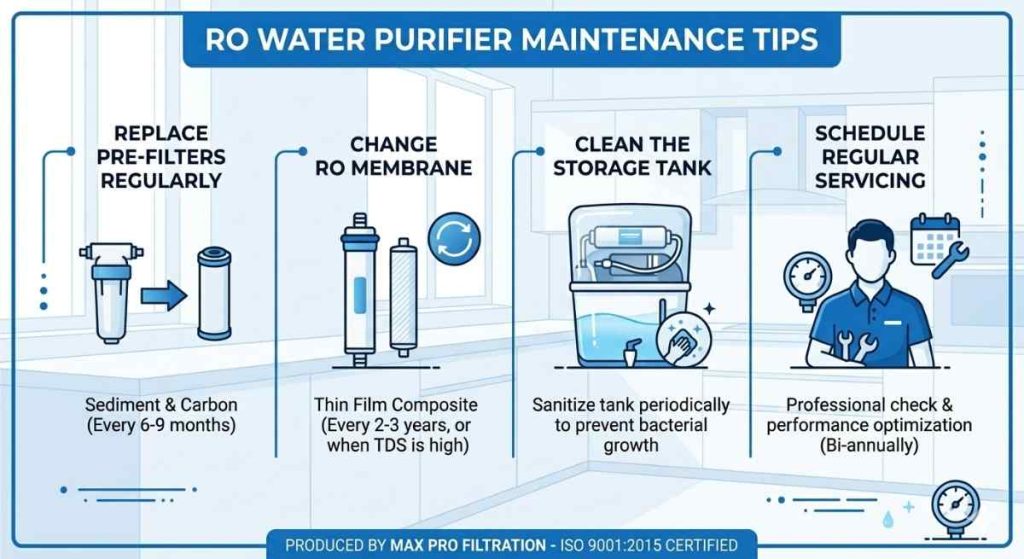
RO Maintenance Tips to Improve Water Flow
Regular servicing and filter replacement can prevent situations where homeowners start noticing why RO water flow becomes slow after months of usage.
Regular maintenance keeps your RO purifier working efficiently.
Follow these tips:
✔ Replace sediment and carbon filters every 6–12 months
✔ Replace the RO membrane every 2–3 years
✔ Clean the storage tank annually
✔ Check water pressure regularly
✔ Service your purifier at least once a year
Proper maintenance helps:
- Maintain steady water flow
- Improve water quality
- Extend purifier lifespan
Signs Your RO Purifier Needs Immediate Servicing
Sometimes homeowners ignore early warning signs until the purifier stops working properly. Recognizing these signs early can help prevent bigger problems.
Here are some common signs that indicate your RO purifier needs servicing:
1. Very Slow Water Flow
If filling a glass takes more than 20–30 seconds, there may be clogged filters or membrane issues.
2. Tank Taking Too Long to Fill
Normally the storage tank fills within 1–3 hours. If it takes much longer, the filtration system may be struggling.
3. Strange Taste or Odor
Water tasting unusual may indicate carbon filter failure or contamination.
4. Continuous Water Drainage
If wastewater continuously flows to the drain, the flow restrictor may be faulty.
5. Unusual Noises from the Purifier
Clicking or humming sounds may indicate pressure or pump issues.
Ignoring these symptoms can reduce purifier efficiency and may lead to costlier repairs later.
Simple Monthly Maintenance Checklist for RO Purifiers
One of the best ways to avoid slow water flow problems is by following a basic monthly maintenance routine.
You don’t need technical skills for this — just a few simple checks can make a big difference.
Monthly Maintenance Checklist
✔ Check the inlet water valve to ensure it is fully open
✔ Inspect the water flow from the faucet
✔ Listen for unusual sounds from the purifier
✔ Clean the outer body and faucet area
✔ Make sure the drain pipe is not blocked
✔ Observe the tank filling time
Doing these checks once a month helps detect small problems early before they affect the purifier’s performance.
When You Should Call a Professional
Some RO issues require expert attention.
Call a technician if:
- Water flow is extremely slow
- The tank is not filling at all
- Filters were recently replaced but problem continues
- Water tastes unusual
- The purifier makes unusual noise
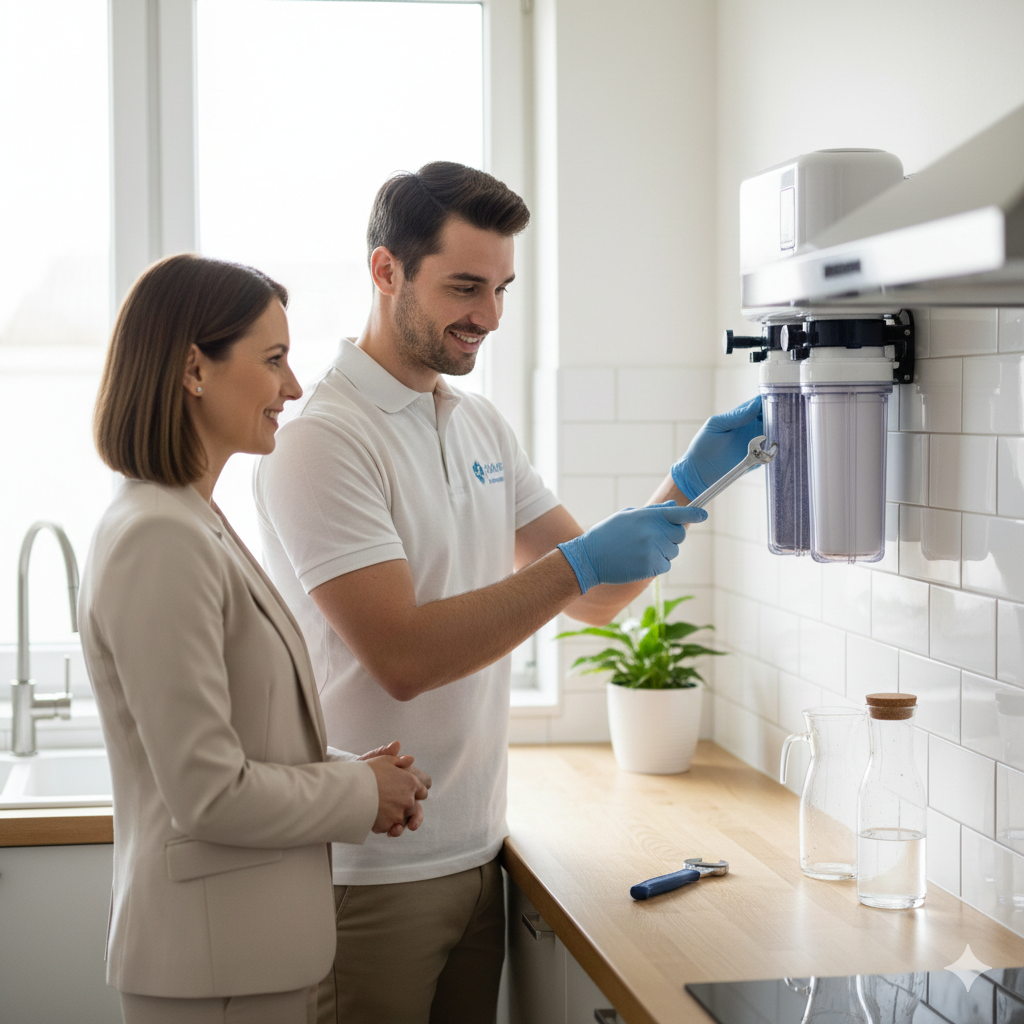
Professional servicing ensures the system is cleaned, calibrated, and repaired correctly.
Understanding normal performance helps you quickly identify why RO water flow becomes slow and whether the purifier needs maintenance.
If your purifier is still producing water slowly, it is best to book RO repair service to prevent further damage.
With best prices:
https://maxprofiltration.com/
How Regular Servicing Improves RO Water Flow
Many people wait until the purifier stops working before calling a technician. However, preventive maintenance is much more effective and affordable.
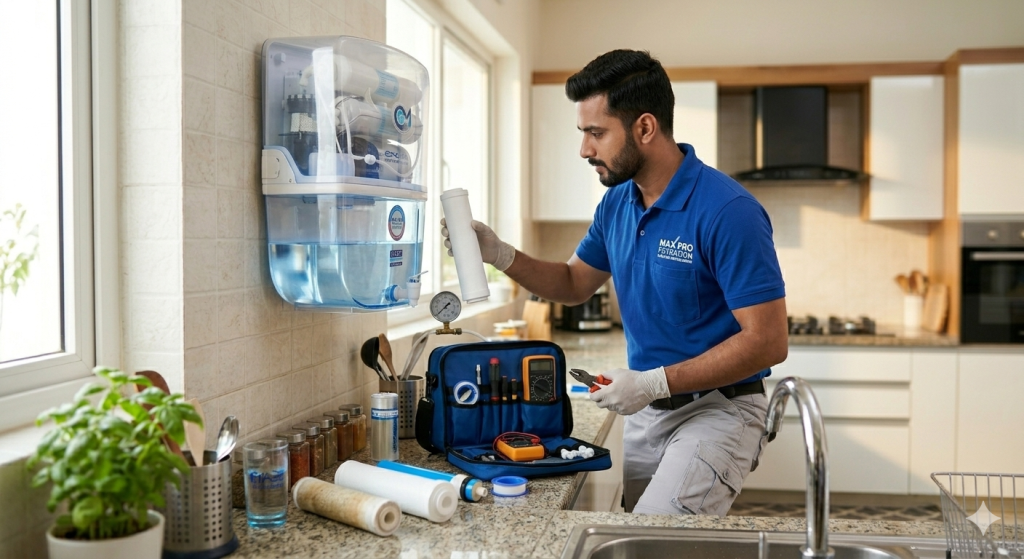
During a professional RO service, technicians typically:
- Replace worn-out filters
- Clean the internal components
- Check water pressure levels
- Inspect the RO membrane
- Test water purity and TDS levels
This complete servicing helps restore the purifier’s original water flow capacity and ensures safe drinking water for your family.
Regular servicing also helps:
- Increase purifier lifespan
- Improve water taste
- Reduce electricity consumption
- Prevent sudden breakdowns
Experts usually recommend servicing your RO purifier at least once every 6–12 months.
Common Myths About Slow RO Water Flow
Many homeowners believe incorrect information about RO purifiers. Let’s clear up some common myths.
Myth 1: Slow RO Flow Means the Purifier is Broken
Not necessarily. Most of the time the issue is caused by clogged filters or low pressure, which are easy to fix.
Myth 2: RO Filters Last for Many Years
Filters gradually accumulate dirt and should be replaced regularly to maintain proper water flow.
Myth 3: Slow Water Flow Improves Filtration
This is not true. Extremely slow flow usually means the purifier is struggling to operate properly.
Myth 4: Servicing is Not Necessary
Skipping maintenance often leads to higher repair costs and poor water quality.
Understanding these myths helps homeowners take better care of their water purifiers.
Conclusion
If you are facing the problem of why RO water flow becomes slow, identifying the cause early can help prevent bigger issues in your purifier. Slow RO water flow is a common issue faced by many households, but the cause is usually simple. Problems such as clogged filters, low water pressure, high TDS levels, or an aging RO membrane can reduce water output.
Regular servicing and timely filter replacement can prevent most of these problems and ensure your purifier continues to deliver clean and safe drinking water.
Call to Action
If your RO purifier is producing water slowly or needs servicing, professional help can quickly solve the problem.
👉 Visit https://maxprofiltration.com/ to book RO installation, repair, or maintenance services and ensure your family always has access to safe and pure drinking water.
Regular servicing and filter replacement can prevent situations where homeowners start noticing why RO water flow becomes slow after months of usage.
Frequently Asked Questions (FAQs)
1. Why is my RO purifier taking a long time to fill the tank?
This usually happens due to clogged filters, low water pressure, or a worn-out RO membrane.
2. How often should RO filters be replaced?
Most RO filters should be replaced every 6–12 months, depending on water quality and usage.
3. Can low water pressure cause slow RO water flow?
Yes. RO systems require adequate pressure to push water through the membrane. Low pressure can significantly reduce water output.
4. How long does an RO membrane last?
An RO membrane typically lasts 2–3 years, but this depends on water quality and maintenance.
5. Is slow RO water flow a serious problem?
Not always. In most cases, it happens due to clogged filters or maintenance issues, which can be easily fixed.
Why does RO water flow become slow?
RO water flow becomes slow mainly due to clogged filters, low water pressure, a worn-out RO membrane, high TDS levels, or storage tank issues. Regular maintenance and timely filter replacement can restore normal water flow.