
Introduction — Facing RO Tank Not Filling Problem at Home?
Imagine this: You go to fill your water bottle in the morning, but your RO purifier gives only a thin stream… or nothing at all. The storage tank that should be full overnight is empty. Frustrating, right?
If your RO tank is not filling, you’re not alone. This is one of the most common RO water purifier issues homeowners face. The good news? In most cases, the problem is easy to identify and fix without major expense.
In this guide, you’ll learn the exact reasons why your RO water purifier is not storing water, along with simple step-by-step troubleshooting you can try at home.
If you are experiencing frequent RO issues or need professional inspection, you can also explore expert guidance and services available at https://maxprofiltration.com/ for reliable solutions.
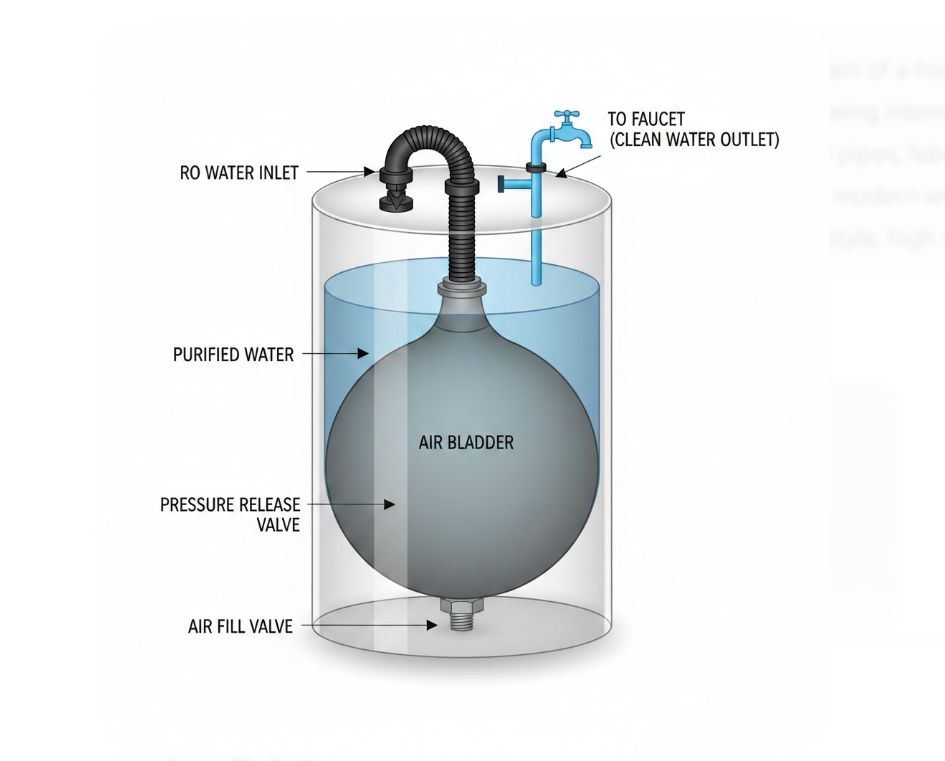
If your RO tank not filling issue has started recently, it usually indicates pressure imbalance, filter blockage, or internal component malfunction that needs quick attention.
How an RO Storage Tank Works
An RO purifier doesn’t store water instantly. It purifies water slowly and stores it inside a pressurized tank.
Here’s how it works:
- Water passes through filters and membrane.
- Clean water enters the storage tank.
- Air pressure inside the tank pushes water out when you open the tap.
- An auto shut-off valve stops filling when the tank is full.
If any component fails — pressure, valve, filters, pump, or tank — the RO tank may stop filling.
Why Proper Tank Filling Is Important for Your RO System
Many homeowners ignore slow tank filling in the beginning, assuming it’s a minor issue. However, improper tank filling can affect not only convenience but also the overall performance and lifespan of your RO purifier.
When the storage tank does not fill correctly:
- The purifier runs longer than normal
- Electricity consumption increases
- Internal components wear out faster
- Water wastage may increase
- Family members may face water shortage
A properly functioning RO tank ensures that purified water is always available when needed — whether for drinking, cooking, or filling bottles quickly during busy mornings.
💡 Expert Insight: Continuous operation without proper storage can reduce membrane life significantly.
Main Components of an RO Storage System
The system includes:
- Sediment and carbon filters
- RO membrane
- Storage tank
- Auto shut-off valve
- Flow restrictor
- Booster pump (in some models)
How Water Gets Stored Inside the Tank
- Water enters the purifier.
- Filters remove impurities.
- Membrane purifies water.
- Clean water enters the tank.
- Tank pressure builds until full.
- Auto shut-off valve stops water flow.
If any part fails, the RO tank may stop filling properly.
Signs Your RO Tank Is Not Filling Properly
Before fixing the problem, you should confirm the symptoms.
Slow Water Flow from RO Tap
If water comes out slowly, the tank may not be filling fully.
Tank Empty Even After Hours
Normally, a tank fills within 1–3 hours. If not, there is an issue.
RO Running Continuously Without Storing Water
Continuous operation often indicates a pressure or valve problem.
Other signs include:
- Unusual noise
- Pump running constantly
- Water only coming when electricity is ON
- Reduced water quantity
Understanding the early symptoms of RO tank not filling can help prevent bigger purifier failures and costly repairs later.
Top Reasons Why RO Tank Not Filling
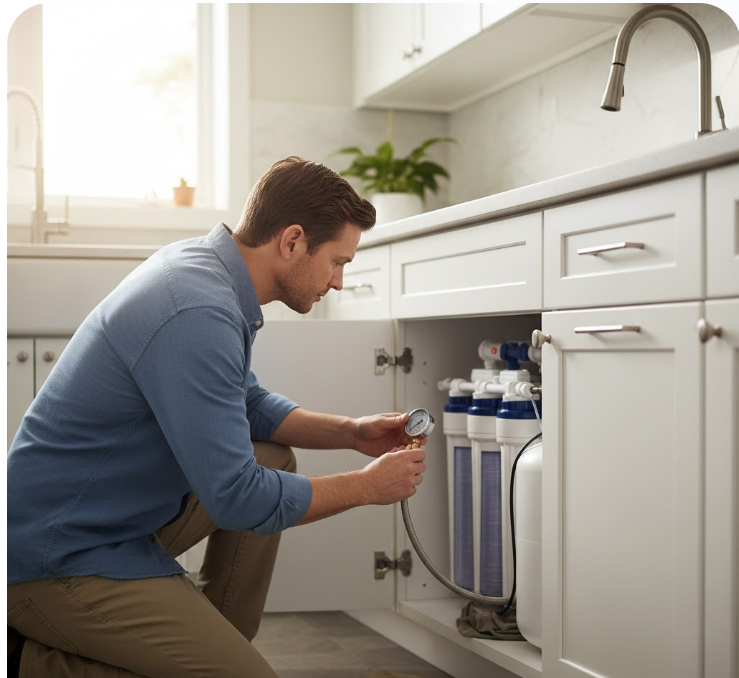
Understanding the cause is the key to solving the issue.
Low Input Water Pressure
RO systems require sufficient pressure. Low pressure prevents water from entering the tank.
Common causes:
- Weak municipal supply
- Clogged inlet valve
- Pipe blockage
Faulty Auto Shut-Off Valve
This valve controls tank filling. If damaged:
- Tank may not fill
- RO may run continuously
- Water may drain out
Clogged Filters or RO Membrane
Dirty filters restrict water flow.
Signs:
- Slow purification
- Low output
- Tank filling delay
Filters usually need replacement every 6–12 months.
Sometimes filter blockage also causes odor issues. You can learn more about this in our article on RO water smells bad — reasons and solutions to understand when filters need replacement.
Tank Air Pressure Problem
The RO tank contains air pressure that pushes water out.
If pressure drops:
- Tank won’t store water properly
- Flow becomes weak
- Tank feels heavy but gives little water
Damaged Flow Restrictor
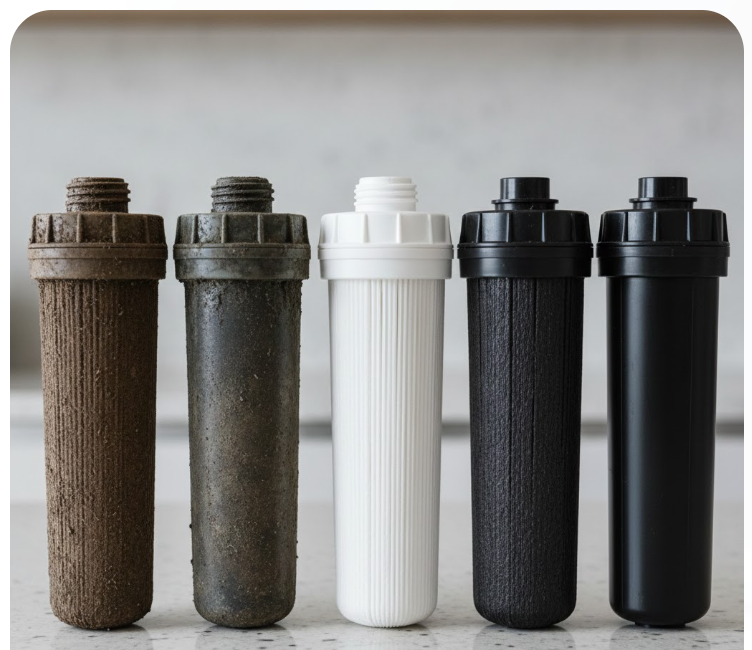
The flow restrictor balances wastewater and pure water flow. Damage affects tank filling speed.
Leakage or Blocked Valves
Even small leaks reduce internal pressure and stop storage.
Booster Pump Malfunction
If your RO has a pump and it fails:
- Tank will not fill
- System may stop working
- Noise may increase
Incorrect Installation or Recent Servicing Errors
Sometimes the issue starts immediately after servicing or installation.
Possible mistakes include:
- Loose pipe connections
- Incorrect valve positioning
- Air trapped inside system
- Improper filter fitting
- Tank valve left closed
If your RO tank stopped filling right after maintenance, installation error is highly likely.
Step-by-Step Troubleshooting Guide to Fix RO Tank Not Filling
Follow these steps carefully.
⚠️ Safety Tip: Always turn OFF power and water supply before inspecting.
Step 1 — Check Water Supply and Pressure
- Ensure inlet valve is open
- Check household pressure
- Look for pipe bends
Low pressure is the most common reason.
Step 2 — Inspect and Replace Filters
Open the purifier and check filters.
If dirty or overdue for replacement, change them.
💡 Quick Tip: Regular filter replacement prevents most RO problems.
Step 3 — Ensure Tank Valve Is Open
Sometimes the tank valve gets partially closed during cleaning or servicing.
Step 4 — Check Tank Air Pressure
Steps:
- Empty tank completely
- Locate air valve under tank
- Measure pressure (5–7 PSI ideal)
- Add air if needed
⚠️ Do not attempt if unsure
Step 5 — Inspect Auto Shut-Off Valve
If RO runs continuously or tank does not fill, this valve may need replacement.
Step 6 — Look for Leakage in Pipes
Check connections for:
- Water drops
- Loose fittings
- Wet surfaces
Even small leakage affects pressure.
Step 7 — Test Booster Pump
If pump is silent or weak, it may require repair or replacement.
If your purifier is producing water but not releasing it properly, you may also want to read our detailed guide on RO not dispensing water problems and solutions, which explains additional causes and fixes.
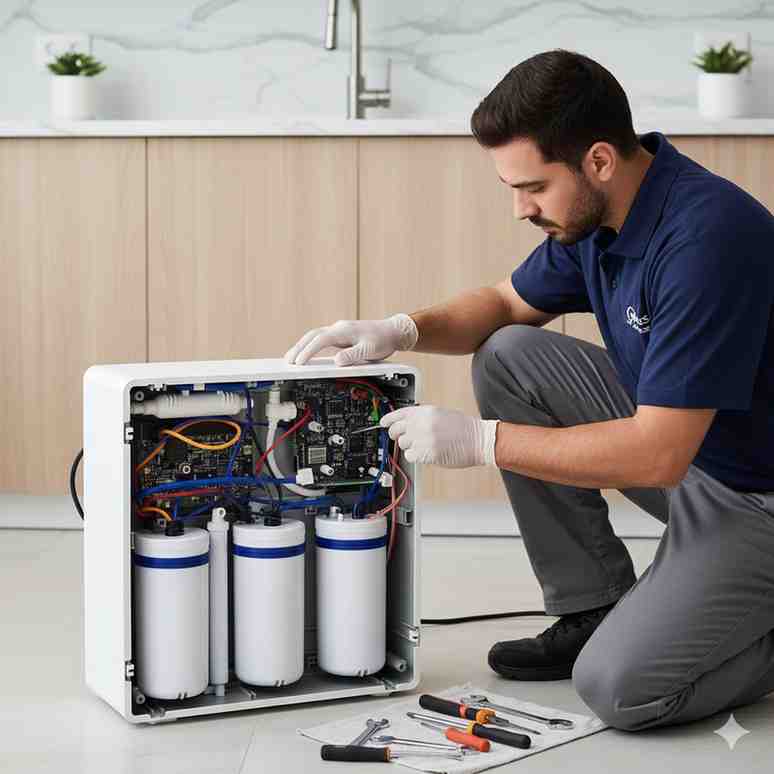
Before calling a technician, you can try some basic steps to fix the RO tank not filling issue at home safely.
Advanced Troubleshooting Tips (For Better Diagnosis)
If basic troubleshooting does not solve the problem, these additional checks can help identify deeper issues.
Check Waste Water Flow
Observe the drain pipe.
- Excessive wastewater → Flow restrictor issue
- No wastewater → Membrane blockage
- Continuous drain → Auto shut-off valve fault
Wastewater behavior often reveals internal problems quickly.
Observe RO Operation Cycle
A healthy RO system follows a cycle:
- Tank empty → RO starts
- Tank filling → Pump runs normally
- Tank full → RO stops automatically
If your purifier does not stop even after hours, the system pressure balance is disturbed.
Monitor Noise and Vibrations
Unusual sounds can indicate:
- Pump failure
- Air inside system
- Pressure imbalance
- Loose fittings
Ignoring noise can lead to bigger damage later.
⚠️ Warning: Never open electrical components without professional help.
If the problem continues even after trying these steps, it may require professional servicing. You can visit https://maxprofiltration.com/ to learn more about RO repair, maintenance, and expert support options.
When to Call a Professional Technician
You should seek expert help if:
- Tank still not filling after checks
- Pump failure suspected
- Electrical issues present
- Internal components damaged
- Leakage continues
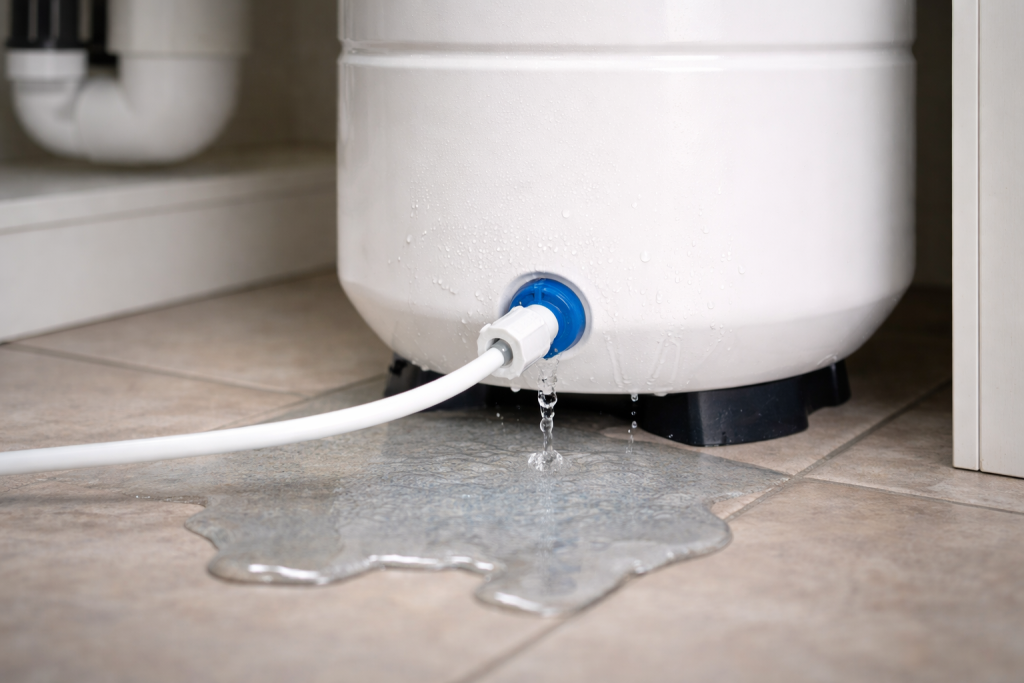
Professional servicing ensures safe repair.
Maintenance Tips to Prevent RO Tank Problems
Prevention saves money and extends purifier life.
Regular Filter Replacement Schedule
Replace filters every 6–12 months.
Importance of Periodic Servicing
Annual servicing keeps components healthy.
Maintaining Proper Water Pressure
Install booster pump if pressure is low.
Other tips:
- Clean tank yearly
- Avoid dry running
- Check leakage monthly
Regular servicing prevents most purifier issues. Our complete RO maintenance guide for homeowners explains how to keep your system running efficiently year-round.
Common Mistakes That Cause RO Tank Filling Problems
Many RO issues are actually caused by user habits rather than technical faults.
Avoid these mistakes:
- Running RO without water supply
- Skipping annual servicing
- Using low-quality duplicate filters
- Ignoring leakage signs
- Installing purifier without pressure check
- Keeping tank unused for long periods
Small mistakes can create major problems over time.
There are several technical and environmental reasons behind the RO tank not filling problem, and identifying the correct cause is the first step toward solving it.
💡 Pro Tip: Always use genuine filters and trained technicians for servicing.
RO Repair Cost — What to Expect
Approximate costs:
- Filter replacement: ₹800 – ₹2500
- Auto shut-off valve: ₹300 – ₹800
- Tank replacement: ₹1500 – ₹4500
- Pump repair: ₹1200 – ₹3000
- General service: ₹700 – ₹1000
Costs vary by brand and location.
The repair cost for an RO tank not filling issue depends mainly on which component is faulty.
How Long Does It Take to Fix RO Tank Not Filling?
Repair time depends on the cause:
- Filter replacement → 30–45 minutes
- Tank pressure adjustment → 15 minutes
- Valve replacement → 30 minutes
- Pump repair → 1–2 hours
- Complete servicing → 1 hour
Most RO tank issues can be resolved on the same day by a technician.
This means you don’t have to worry about long periods without drinking water.
Frequently Asked Questions (FAQs)
Why is my RO tank not filling but motor running?
Usually caused by low pressure, clogged filters, or auto shut-off valve failure.
How long does an RO tank take to fill?
Typically 1–3 hours depending on pressure and purifier capacity.
Can low pressure stop RO tank filling?
Yes, RO systems need sufficient pressure to store water.
How do I increase RO tank pressure?
By adding air using a pump after emptying the tank.
Why does RO run continuously without storing water?
Often due to faulty auto shut-off valve or tank pressure issue.
How often should RO tank be replaced?
Usually every 3–5 years depending on usage.
Why is my RO tank not filling properly?
The RO tank not filling problem is usually caused by low water pressure, clogged filters, tank air pressure imbalance, or a faulty auto shut-off valve.
Conclusion — Fix Your RO Tank Filling Problem Easily
If your RO tank is not filling, don’t panic. Most problems happen due to simple reasons like low water pressure, clogged filters, or valve faults. With proper troubleshooting and maintenance, your purifier can work efficiently again.
Key takeaways:
✔ Check water pressure first
✔ Replace filters regularly
✔ Maintain tank air pressure
✔ Service purifier periodically
If you’re unsure about repairs, calling a professional technician is always the safest option.
In most homes, the RO tank not filling issue can be resolved quickly with proper troubleshooting and timely servicing.
For expert RO servicing, maintenance tips, and water purifier solutions, you can check https://maxprofiltration.com/ where you’ll find helpful resources and professional assistance.
Clean drinking water is essential for your family’s health — and timely RO maintenance ensures you always have it.