

If your RO making noise suddenly catches your attention, you’re not alone. Many homeowners feel worried when their water purifier starts producing unusual sounds like humming, vibrating, knocking, or buzzing. The first thought is often: Is my RO damaged? Do I need repair?
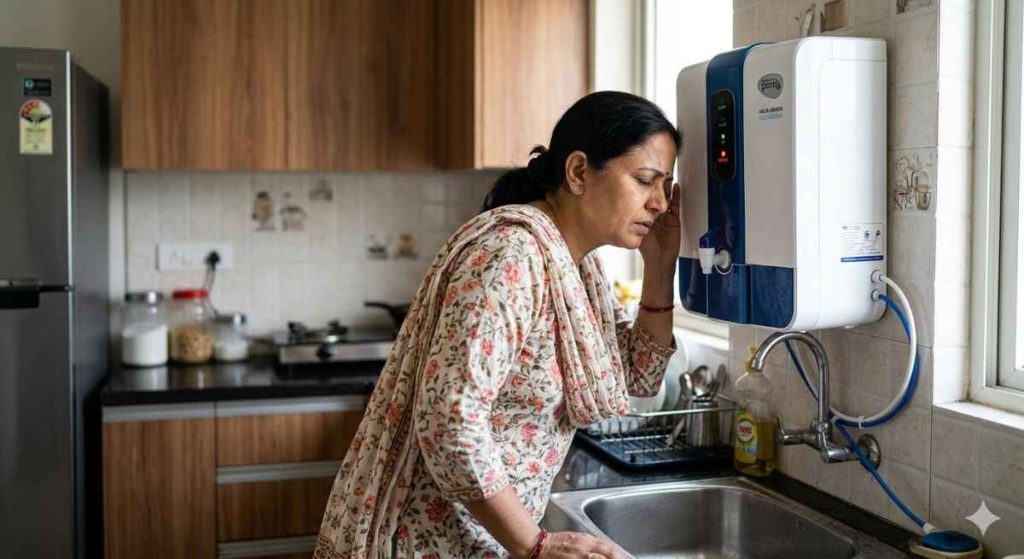
The truth is — not every RO purifier noise problem is serious. Some sounds are completely normal, while others indicate minor issues you can fix at home.
In this guide, you’ll learn:
- Why your RO is noisy
- What different sounds mean
- Step-by-step solutions
- When to call a technician
- How to prevent noise problems
Let’s understand the problem like an expert.
“If your purifier is also showing other symptoms like bad smell or taste, you can read our detailed guide on RO water problems.”
If you want professional guidance about water purifier maintenance and repair, you can also explore expert resources available at Max Pro Filtration to understand common RO issues and solutions.
Is It Normal for an RO to Make Noise?
Yes, some sound is completely normal.
An RO purifier includes:
- Booster pump
- Filters and membrane
- Storage tank
- Water flow valves
When water flows under pressure, mild humming or vibration occurs naturally.
Normal RO Sounds
✔ Low humming during purification
✔ Gentle vibration while tank fills
✔ Clicking when auto shut-off activates
Abnormal RO Sounds
❌ Loud vibrating sound
❌ Continuous buzzing
❌ Knocking or hammering
❌ Screeching motor noise
If your RO making noise louder than usual, it may need attention.
Common Reasons Your RO Is Making Noise
Understanding the cause helps you choose the right RO pump noise solution.
1. Pump Vibration (Most Common Cause)
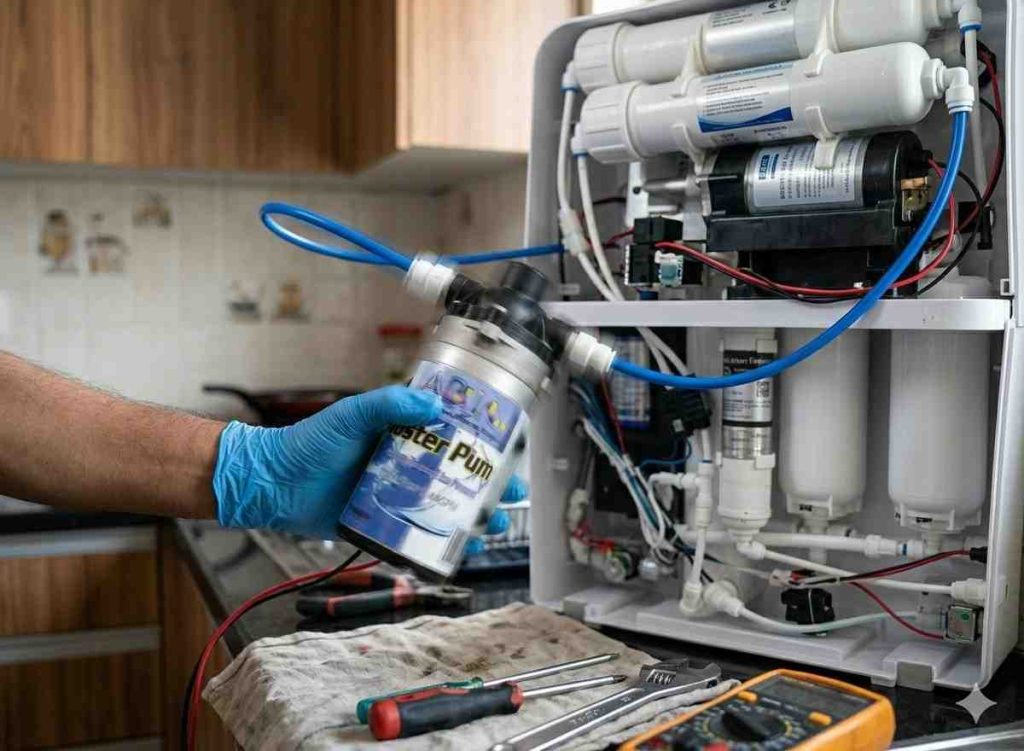
The booster pump creates pressure for filtration. If loose or worn, it causes RO making vibrating sound.
Possible reasons:
- Loose mounting screws
- Worn rubber supports
- Aging pump motor
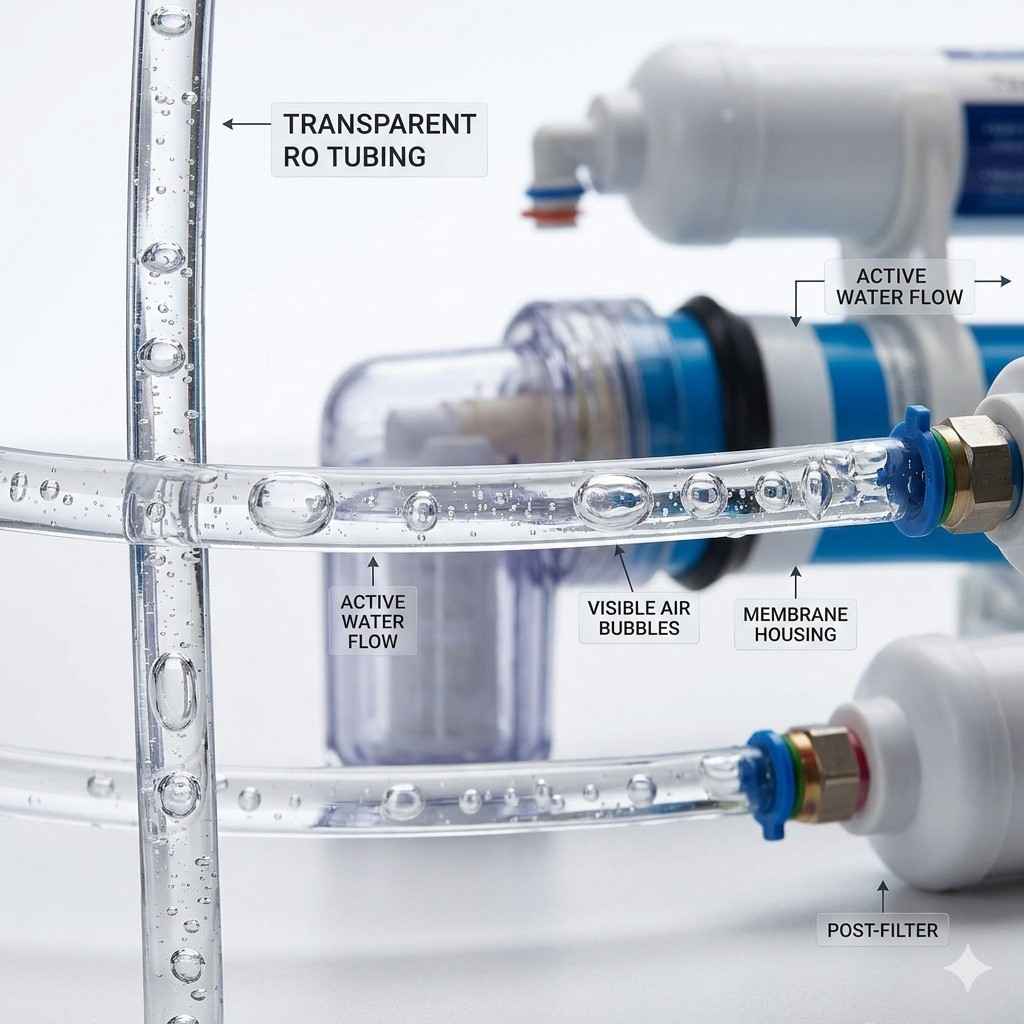
2. Air Trapped Inside the System
Air bubbles create gurgling or knocking sounds.
This often happens:
- After filter replacement
- After long non-use
- When water supply was interrupted
3. High Water Pressure
Excess inlet pressure forces water aggressively, causing:
- Loud humming
- Vibrations
- Pipe shaking
This is a major reason people ask, “Why is my RO noisy?”
4. Loose Fittings or Pipes
Loose connectors create rattling noise when water flows.
Check for:
- Loose screws
- Pipes touching cabinet walls
- Improper mounting
5. Filter or Membrane Blockage
Clogged filters force the pump to work harder, increasing noise.
Signs include:
- Slow water flow
- Loud pump sound
- Continuous running
This is a common RO purifier noise problem when servicing is overdue.
6. Faulty or Aging Motor
Older purifiers may produce:
- Grinding noise
- Screeching sound
- Loud buzzing
This usually requires professional repair.
“Blocked filters can also affect water quality. Learn when to replace them in our RO filter replacement guide.”
What Different RO Sounds Mean (Diagnosis Guide)
Here’s a quick guide to identify your RO making noise issue:
Sound Meaning Chart
- Humming: Normal pump operation
- Vibrating: Loose pump or high pressure
- Knocking: Air trapped or pipe movement
- Buzzing: Motor stress or blockage
- Grinding: Motor damage
- Continuous running: Tank or filter issue
Understanding the sound helps prevent bigger damage.
Does RO Noise Affect Water Quality?
One of the most common concerns homeowners have when they notice RO making noise is whether the drinking water is still safe.
The answer depends on the cause of the noise.
When Noise Does NOT Affect Water Quality
In many cases, noise is only related to mechanical vibration and does not impact purification performance.
Examples include:
- Loose mounting screws
- Slight pump vibration
- Air trapped in pipes
- External cabinet vibration
In these situations, your water is usually safe to drink.
When Noise MAY Affect Water Quality
However, certain problems linked to RO purifier noise problem can reduce filtration efficiency.
Watch for these warning signs:
⚠ Slow purification speed
⚠ Bad taste or odor
⚠ Continuous drainage water
⚠ Tank not filling properly
⚠ Very loud pump running continuously
These symptoms may indicate:
- Membrane blockage
- Filter exhaustion
- Pump pressure failure
If you notice both noise and performance issues, it’s best to schedule servicing immediately.
Expert Tip: Always trust changes in water taste along with unusual sounds — together they signal maintenance is needed.
Clogged filters can not only cause vibration and noise but also change water taste. You can learn more in our article on RO water tastes bitter and how to fix it.
How to Fix RO Noise at Home (Step-by-Step Solutions)
Before calling a technician, try these simple RO repair tips.
Step 1: Check Purifier Placement
Ensure the unit:
- Is stable
- Not touching walls tightly
- Properly mounted
Small vibrations can amplify noise.
Step 2: Tighten Loose Parts
Turn off power and water supply.
Check:
- Pump screws
- Filter housings
- Pipe connectors
Loose parts often cause RO making vibrating sound issues.
Step 3: Release Trapped Air
If noise started after servicing:
- Turn on water supply
- Keep tap open for 5–10 minutes
- Let system flush completely
Air bubbles will exit naturally.
Step 4: Check Water Pressure
Install a pressure regulator if pressure is high.
Ideal pressure: 40–60 PSI
High pressure commonly causes RO making noise complaints.
Step 5: Replace Old Filters
If filters are clogged:
- Sediment filter: 6–12 months
- Carbon filter: 6–12 months
- RO membrane: 2–3 years
Blocked filters increase pump workload.
Step 6: Inspect Pump Condition
If noise continues:
- Pump may be worn out
- Motor bearings damaged
Professional servicing is recommended.
Which RO Brands Commonly Face Noise Issues?
Many users wonder if RO making noise is related to brand quality. The truth is — all brands can develop noise problems over time due to wear and maintenance neglect.
However, noise issues are more common when:
- Filters are not replaced on schedule
- Low-quality spare parts are used
- Installation is improper
- Water pressure fluctuates frequently
Factors That Matter More Than Brand
Instead of brand name, focus on:
- Installation quality
- Maintenance frequency
- Water pressure conditions
- Technician expertise
Even a premium purifier can become noisy if maintenance is ignored.
How to Choose a Reliable Service Technician
To avoid recurring RO pump noise solution problems:
✔ Choose certified technicians
✔ Use genuine spare parts
✔ Ask for pressure testing
✔ Ensure vibration control during installation
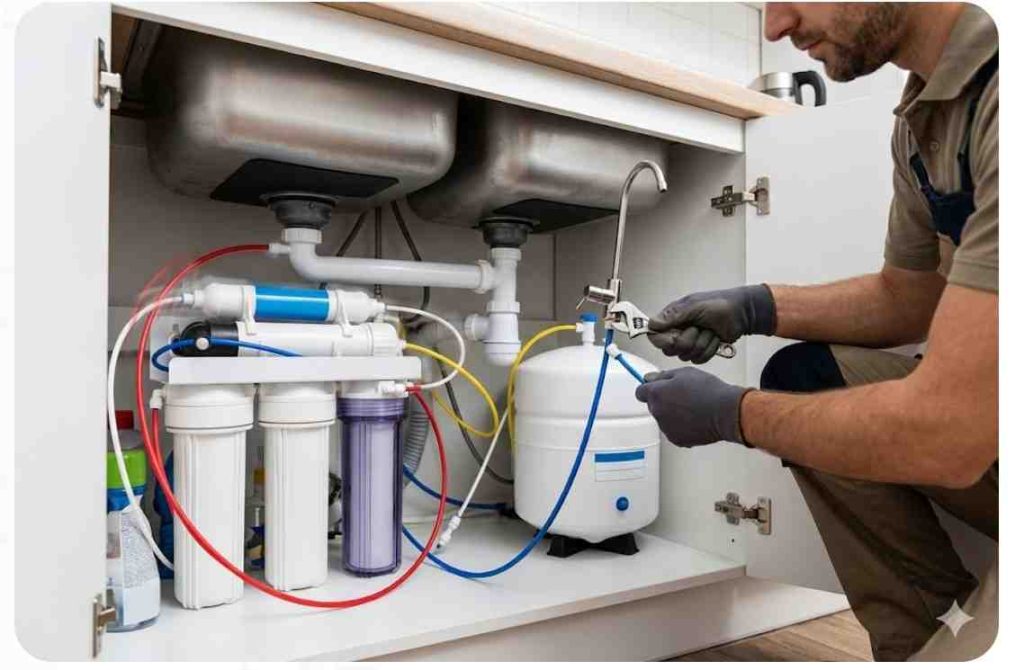
A skilled technician can reduce noise significantly during servicing itself.
When You Should Call a Technician
Some RO purifier noise problem situations require expert help.
Call a technician if you notice:
⚠ Loud grinding sound
⚠ Burning smell
⚠ Water leakage with noise
⚠ Continuous running
⚠ No water output
Ignoring these signs may damage the pump permanently.
Cost of Fixing RO Noise Problems in India
Another major worry people have when their RO making noise is the repair cost.
Here’s a general estimate to help you understand:
Minor Issues (Low Cost)
- Tightening fittings
- Air removal
- Pressure adjustment
Estimated cost: ₹150 – ₹400
Moderate Issues (Medium Cost)
- Filter replacement
- Pipe replacement
- Valve repair
Estimated cost: ₹400 – ₹1500
Major Issues (Higher Cost)
- Booster pump replacement
- Motor repair
- Electrical component replacement
Estimated cost: ₹1500 – ₹3500+
Costs vary depending on brand and city, but early repair always saves money.
Expert Advice: Ignoring a small vibrating sound today can lead to pump replacement tomorrow.
Proper maintenance not only reduces noise but also minimizes water wastage. You can also learn smart methods for conserving water in our article on how to reuse RO waste water at home.
How to Prevent RO Noise in Future
Prevention saves money and extends purifier life.
Regular Maintenance
Annual servicing prevents:
Replace Filters on Time
Old filters are the most common cause of RO making noise over time.
Install Pressure Regulator
Important in high-pressure water supply areas.
Secure Installation
Ensure:
- Firm mounting
- Proper pipe alignment
- Vibration support
Use Quality Spare Parts
Cheap components cause recurring noise issues.
Maintenance Schedule to Keep Your RO Silent
Regular servicing is the secret to preventing RO making vibrating sound problems.
Follow this recommended maintenance schedule:
Every 3 Months
- External cleaning
- Leak inspection
- Pipe check
Every 6–12 Months
- Sediment filter replacement
- Carbon filter replacement
- Pressure testing
Every 2–3 Years
- RO membrane replacement
- Pump performance testing
Signs Your RO Needs Immediate Service
Don’t wait for annual maintenance if you notice:
⚠ Sudden loud noise
⚠ Water flow decrease
⚠ Continuous pump running
⚠ Strange taste or smell
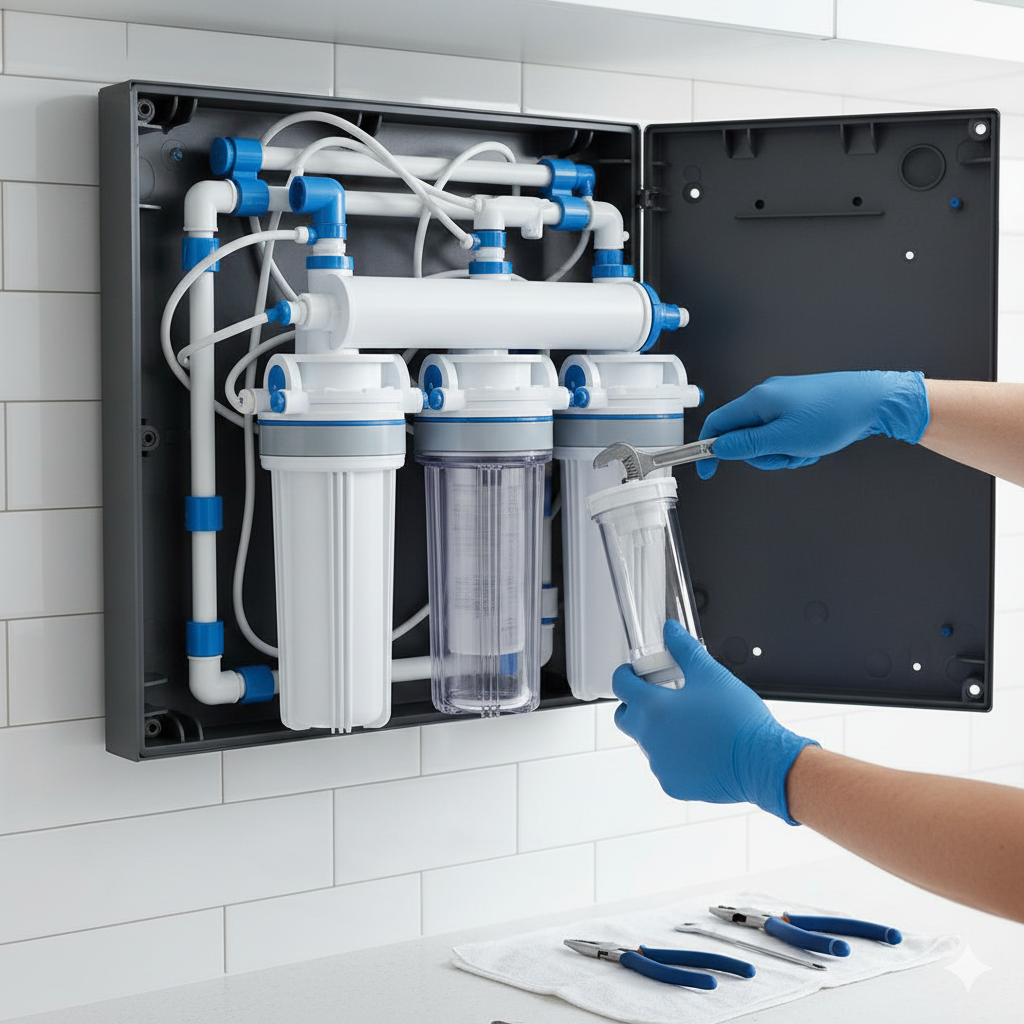
Timely servicing prevents expensive repairs and extends purifier lifespan.
Expert Safety Tips
Before attempting any RO pump noise solution:
✅ Switch off power supply
✅ Close inlet valve
✅ Avoid electrical components
✅ Never run dry pump
Safety always comes first.
FAQs — People Also Ask
1. Why is my RO making noise while filling the tank?
Usually due to pump pressure or vibration. Mild sound is normal, but loud noise may indicate loose parts or high pressure.
2. Is RO making noise dangerous?
Not always. Many sounds are harmless, but grinding or burning smells require immediate repair.
3. Why is my RO noisy after filter change?
Air trapped inside the system is the most common reason. Flushing usually solves it.
4. Can I use my RO if it is making loud noise?
External Reference
According to water purification experts, maintaining proper pressure and timely filter replacement significantly improves RO lifespan and reduces operational noise.
DIY vs Professional Repair — What’s Better?
When homeowners notice RO making noise, they often try to fix everything themselves. While some problems are easy, others require technical expertise.
DIY Repairs Are Safe For:
✔ Tightening loose fittings
✔ Checking placement
✔ Releasing trapped air
✔ Replacing external filters
Professional Repair Is Needed For:
❌ Pump replacement
❌ Motor noise
❌ Electrical issues
❌ Pressure regulator installation
❌ Internal leakage
Attempting complex repairs without knowledge can damage the purifier further.
Pro Tip: If the noise comes from inside the pump area, call a technician.
Conclusion: Don’t Ignore RO Making Noise — Fix It Early
If your RO making noise, it’s a sign that something needs attention. Sometimes it’s a simple fix like tightening a screw or replacing a filter. Other times, professional service may be required.
Early action prevents:
❌ Pump damage
❌ Higher repair costs
❌ Poor water quality
With proper maintenance, your RO can run quietly for years.
If your RO purifier is still making noise after troubleshooting, getting expert inspection is the safest option. Visit https://www.maxprofiltration.com to learn more about professional RO repair and maintenance solutions.
Need Professional RO Service?
Facing persistent RO purifier noise problem?
Our expert technicians provide:
✅ Fast diagnosis
✅ Genuine spare parts
✅ Affordable pricing
✅ Doorstep service
👉 Book your RO service today and enjoy silent, safe drinking water again in just one call by Max Pro Filtration
It’s better to inspect first. Continuous loud noise may damage the pump.